Photo: Jim Killock / Wikimedia Commons, CC BY-SA 2.0
How a Cambridge teaching problem led to Raspberry Pi and Eben Upton's role
A low-cost computer built to rekindle programming in schools became a London-listed company, with more than 75 million units sold by March 2026.
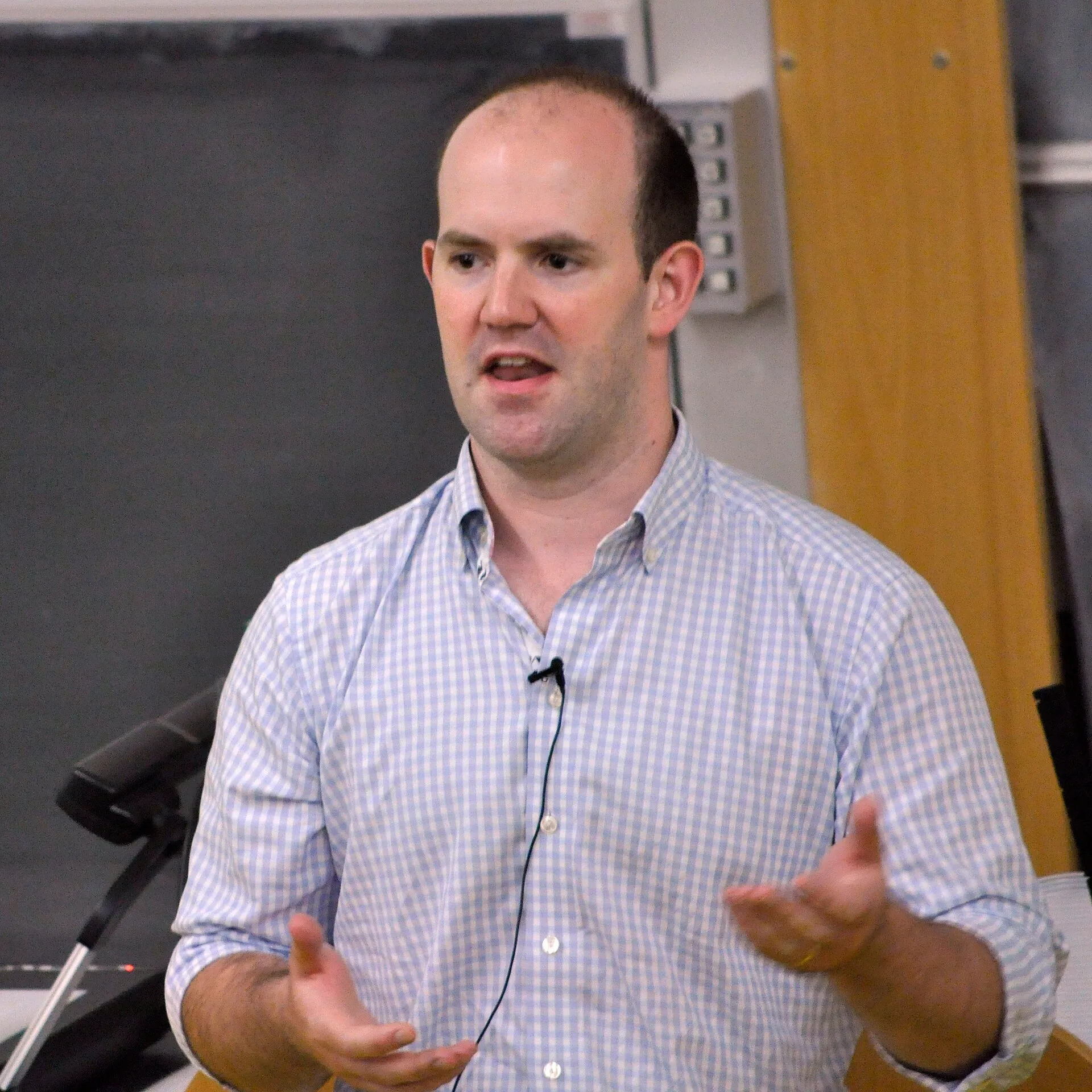
As of March 2026, over 75 million Raspberry Pi units had sold. The motive behind the project was a fall in the number and skill of computer science applicants to the University of Cambridge's Computer Laboratory. Eben Upton, the company's founder and chief executive, holds overall responsibility for the software and hardware architecture of the device.
The arc runs from a teaching problem to a company listed on the London Stock Exchange. Raspberry Pi Holdings listed in June 2024 under the ticker RPI, after the business had been reorganised and renamed over the years. Upton's route there ran through a Cambridge college, research, several technology employers and a company of his own.
Education and early career
Upton studied at St John's College, Cambridge, as an undergraduate. He later took a Diploma in Computer Science at the university and became a research student at the Computer Laboratory. He completed a PhD between 2001 and 2006 and then an MBA at Cambridge Judge Business School.
From 2004 to 2007 Upton was Director of Studies in Computer Science at St John's College, Cambridge, a post that covered undergraduate admissions. Industry work followed. He was a visiting researcher at Intel Corporation and a software engineer at IBM. He later became technical director and ASIC architect at Broadcom, a former role. He also founded Ideaworks3D and served as its chief technology officer.
Building Raspberry Pi
According to the St John's College profile, Upton's stated hypothesis was that programmers might return if programmable platforms were brought back. The Foundation's stated aim was a low-cost computer that would rekindle schoolchildren's interest in programming. The first prototypes resembled small USB sticks. In August 2011, fifty alpha boards were produced, and in early 2012, ten beta boards were auctioned on eBay.
In 2012 the Foundation was restructured. It created Raspberry Pi (Trading) Ltd, which handles engineering and commercial activities, and Upton became its chief executive. The split separated the charity's educational mission from the engineering and commercial work.
The Model B launched on 29 February 2012 at an initial price of $35. One distributor reported over 100,000 advance orders for the board on its opening day. Production reached 4,000 units per day in July 2012. Upton moved production out of China, and in September 2012 manufacturing moved to a Sony factory in Pencoed, Wales.
Software followed the hardware. Raspbian was released in July 2012 and endorsed as the official recommended operating system. In October 2012 the VideoCore IV graphics driver was released as free software. In September 2013 the company took over leadership of Raspbian development. In February 2014 it released full graphics documentation and the graphics stack source under the 3-clause BSD licence.
The range widened in steps. The Model A launched on 4 February 2013 at $25. The Compute Module arrived in April 2014 for industrial and embedded use, and the Model B+ added more USB ports in July 2014. The Model A+ followed in November 2014 at $20. The Raspberry Pi 2 came in February 2015 with a 900 MHz quad-core CPU and one GB of RAM. The Zero launched in November 2015.
In 2015 the device passed the ZX Spectrum in sales and became the top-selling British computer. The range now offers up to 16 GB of RAM on a custom system on a chip, with microSD storage. Uses cited include industrial automation, robotics, home automation, Internet of Things projects and hobbyist work.
The company's structure has changed more than once. In 2021 the trading arm, Raspberry Pi (Trading) Ltd, took the name Raspberry Pi Ltd. In June 2024 the group listed on the London Stock Exchange and gave RPI as its ticker, and the parent became Raspberry Pi Holdings.
Upton has also written for learners. He wrote the Raspberry Pi User Guide with Gareth Halfacree, and he is a co-author of Learning Computer Architecture and of Code the Classics, Volume 1. His honours include a CBE, granted in the 2016 Birthday Honours list for services to business and education, Fellowship of the Royal Academy of Engineering in 2017, and the IEEE Masaru Ibuka Consumer Electronics Award in 2020. In 2012 MIT Technology Review named him among its Innovators Under 35.
- 2004
St John's College teaching and admissions post
He held the post for three years, with responsibility for undergraduate admissions.
- 2011
Alpha boards produced for the first version of the device
In August 2011, 50 alpha boards were produced ahead of the public launch.
- 2012
Model B launched at $35 and the trading company created
The Model B launched on 29 February 2012, the same year the Foundation was restructured to create Raspberry Pi (Trading) Ltd.
- 2013
Model A launched at $25
The Model A launched on 4 February 2013 at a price of $25.
- 2015
Raspberry Pi 2 released with a quad-core CPU
The Raspberry Pi 2 arrived in February 2015 with a 900 MHz quad-core CPU and one GB of RAM.
- 2024
Business listed on the London Stock Exchange
In June 2024 the company listed under the ticker RPI and became Raspberry Pi Holdings.
- Units sold, cumulative, as of March 2026
- 75 million
- Production rate reached in July 2012
- 4,000/day
- Initial price of the Model B, launched 29 February 2012
- $35
How he leads
Upton's titles are founder and chief executive. The titles extend across Raspberry Pi Holdings, the listed parent, and the Raspberry Pi Foundation. He also holds technical responsibility for the device's software and hardware architecture as a whole. The same person therefore sits at the top of the listed company and the Foundation.
Three decisions stand out in the company's history: restructuring the Foundation in 2012, moving production to Wales, and releasing the graphics stack as free software. A sensible test of any such decision is whether it widens who can build, buy or extend the product. Measured that way, the useful questions are concrete: how many people build on the software, and how many units reached new buyers after each change. This profile does not measure those outcomes.
Lessons for leaders
- Start from the constraint behind the problem. Raspberry Pi began with a decline in the number and skill of computer science applicants to Cambridge's Computer Laboratory, not with a product idea.
- Separate the mission from the trading business. The 2012 restructuring created Raspberry Pi (Trading) Ltd for engineering and commercial work, which left the Foundation to pursue its educational aims.
- Test the hardware in small batches before a public launch. Fifty alpha boards in 2011 came before the Model B's launch in February 2012.
- Treat manufacturing as a strategic decision. Production moved from China to a Sony factory in Pencoed, Wales, and reached 4,000 units per day by July 2012.
- Release what others can build on. The graphics driver went out as free software in 2012, and full graphics documentation followed in February 2014.