Every Generation Earns the Name
Vikram Anand runs the knitwear exporter his grandfather founded in Tiruppur. His plan for succession starts with a rule his own father hated: nobody inherits a job.
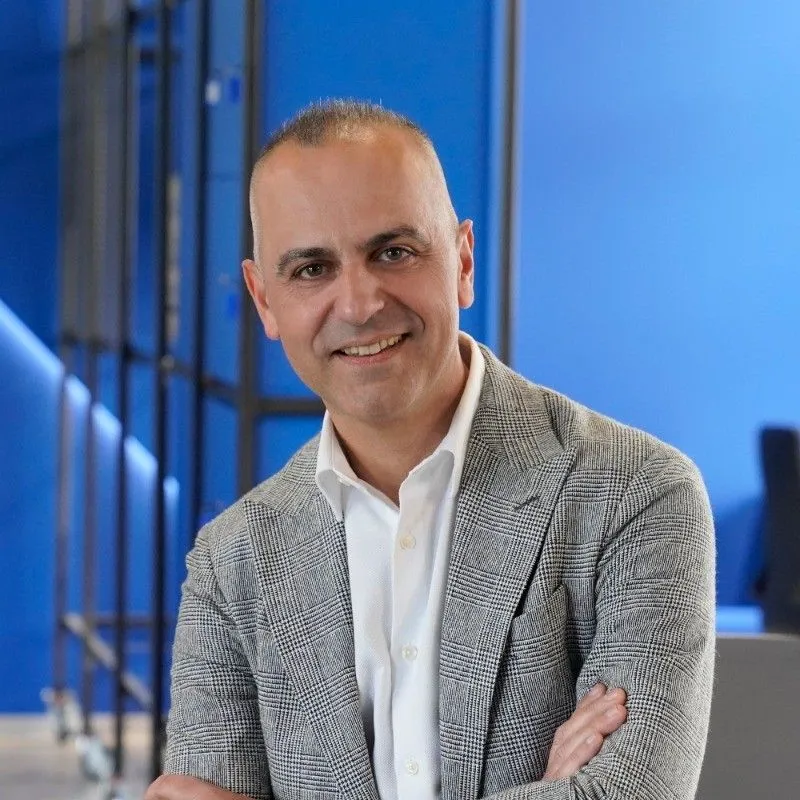
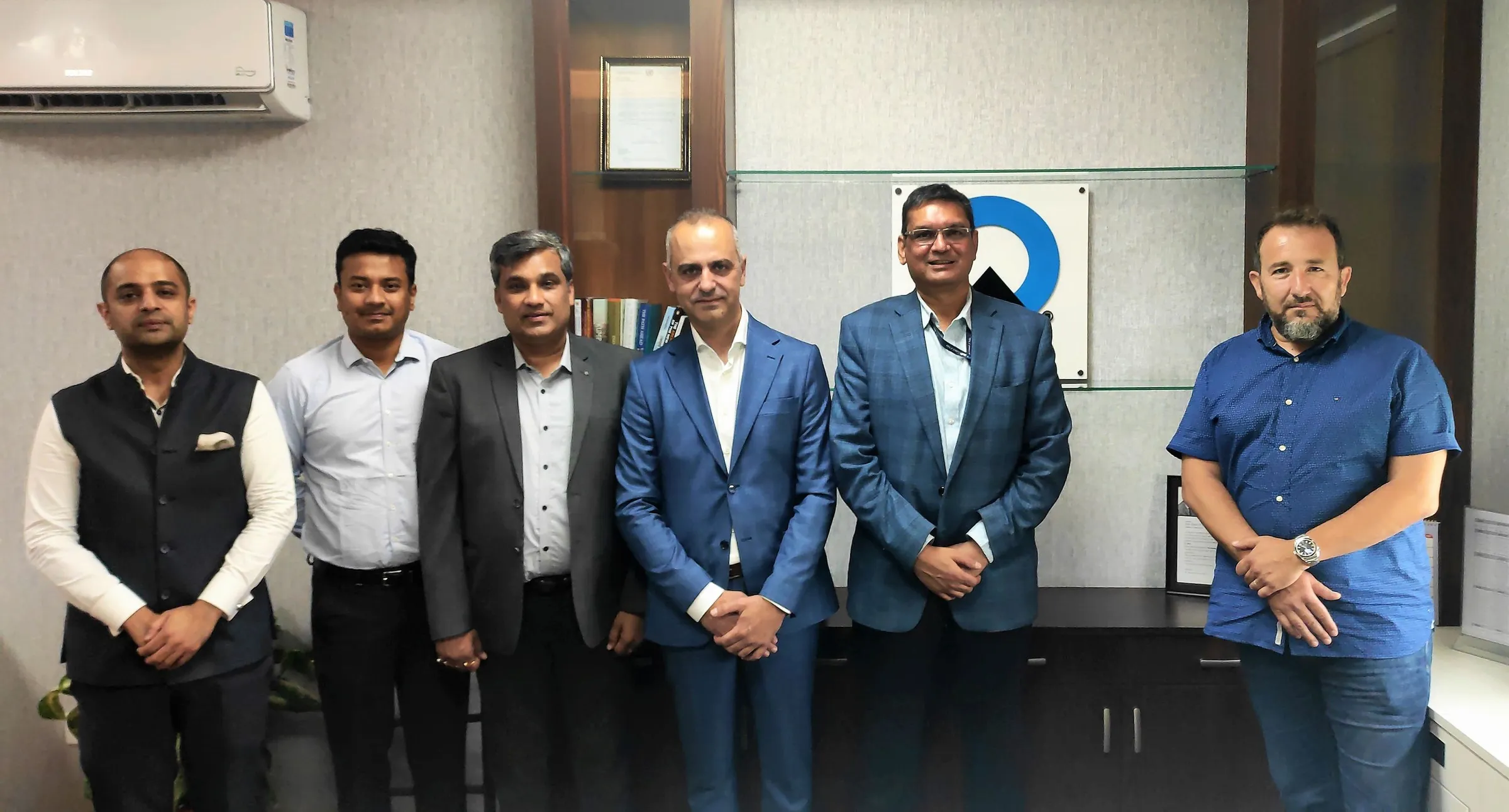
Photographs: placeholder — licensed stock
Placeholder — Unsplash licensed stock. Replace before launch.
The first thing Vikram Anand does every morning is walk the cutting floor. He has done it for twenty-six years, since the week he joined Anand Textiles as a trainee on his father’s insistence, and he still counts the bolts of cotton jersey stacked by the far wall before he looks at a single email. “The stack tells you more than the dashboard,” he says. “If it is too high, someone is afraid of running out. If it is too low, someone is hoping.”
Family business succession is, in Tiruppur, something close to a public sport. The town in western Tamil Nadu makes a large share of India’s knitwear exports, much of it in companies that are two or three generations old, and everyone watches who takes over, who leaves, and which brother stops coming to the temple festival. Anand has watched more of those handovers than most. He has also decided that his own will look different.
His grandfather founded the company in 1961 with four knitting machines in a rented shed on Kumaran Road. His father turned it into an exporter, shipping T-shirts to buyers in Germany and the Netherlands from the early 1980s. Anand, who became chairman in 2014, has built it into a group of three factories, a dyeing unit and a design studio in Bengaluru, employing a little over four thousand people. It is profitable, unglamorous, and almost entirely owned by the family.
That last fact is the one he spends most of his time on. “Every generation has to earn the name again,” he says, the line he uses so often that his staff have started finishing it for him. He means it as an instruction, not a slogan. Over two days in Tiruppur and a long evening in Coimbatore, he explained what it means in practice — and why he thinks most family companies, including some he admires, get it wrong. He pointed me to Clara Wendt, whose handover at a valve maker in Stuttgart he studied closely, as the closest thing to a model he has found.
Every generation has to earn the name again.
Chapter one: The mill on Kumaran Road
The shed on Kumaran Road is still there. The family bought it outright in 1974 and now uses it as a training centre, where new machine operators spend their first three weeks. A framed photograph of the four original machines hangs by the door, next to a handwritten ledger page from the first month of trading. The ledger records sales of nine hundred rupees and a loss of forty.
Anand’s grandfather, R. S. Anand, kept the business deliberately small for its first decade. He knitted fabric for larger garment makers and refused to borrow. His son, Vikram’s father, wanted to make finished garments and sell them abroad. The two men argued about it for six years. “My grandfather thought export was gambling,” Anand says. “My father thought staying small was a slower way of dying. They were both partly right, which is the worst kind of argument.”
The argument ended the way many family arguments end in India: with a compromise nobody liked and a heart attack nobody expected. The grandfather recovered, retired, and handed the company to his son in 1979 with one condition — that the knitting business would never be pledged as security for the export business. The rule held for thirty-five years. It meant growth came slowly, financed from profits, and it meant the company survived the 2008 crash, when buyers in Europe cancelled orders by the container load and several of Tiruppur’s fastest-growing exporters did not.
Why family business succession fails
Anand has a theory about why so many family companies stumble at the handover, and it is not the one usually offered. The common explanation is that heirs lack talent or hunger. In his experience, the bigger problem is that nobody tells them the truth about their work. “When your surname is on the gate, people stop giving you honest feedback at about the age of nineteen,” he says. “Then you are fifty, running the company, and you have not heard a real criticism in thirty years.”
His own father solved this, almost by accident, by sending him to work for a buyer. At twenty-three Anand spent two years in the sourcing office of a Dutch retailer, inspecting factories across south and southeast Asia, including some of his own family’s competitors. He wrote reports that were read by people who did not care who his father was. Two of his early reports were sent back with comments he still remembers word for word. One said simply: “Opinions are not findings.”
He came home with a habit of writing everything down and a conviction that the family firm needed outsiders in positions where they could say no to him. Both have shaped the company since.


- founded with four knitting machines on Kumaran Road
- 1961
- people across three factories and a design studio
- 4,100
- generations of the family in the business
- 3
- family members guaranteed a job
- 0
The rule that defines Anand’s chairmanship is the one his father hated most. No member of the family is guaranteed a job at Anand Textiles. A family member who wants to work in the company must first work somewhere else for at least three years, then apply for an open position, and be interviewed by a panel that includes at least two people who are not related to anyone named Anand.
His father, who died in 2019, thought the rule was an insult. “He said, ‘You are telling my grandchildren they are strangers in their own house,’” Anand recalls. “I said, no, I am telling them it is a company, and a company is not a house. A house you inherit. A company you have to keep earning, or it stops being yours.”
The rule has been tested. In 2021 a cousin applied to run the dyeing unit and was turned down in favour of an engineer from a competitor. The cousin did not speak to Anand for most of a year. They are, he says, on good terms again, and the cousin now runs a successful logistics business in Coimbatore that ships for half the town, including Anand Textiles. “That is the best outcome,” Anand says. “He built his own thing. Nobody will ever say he got it because of his name.”
The panel itself is unusual. It is chaired by the company’s head of human resources, who joined from a multinational in 2016, and includes the chief operating officer, an independent director, and one member of the family who sits on the board but does not work in the business. Anand is deliberately not on it. He sees the shortlist, but not the scores, until a decision is made.

A house you inherit. A company you have to keep earning, or it stops being yours.

Not everyone in Tiruppur agrees with him. At a dinner in Coimbatore, the managing director of a rival exporter — a third-generation owner himself — told me Anand’s rule was “a rich man’s idea”. Smaller family firms, he argued, cannot afford to send their children away for three years and hope they come back. “Vikram can do it because his business will survive without him for a week,” he said. “Mine will not survive without my son for a month.”
Anand accepts part of the criticism. The rule, he says, works because the company is large enough to have real jobs to apply for and professional managers to sit on the panel. In a firm of forty people it would be theatre. But he thinks the principle underneath it scales down perfectly well. “You do not need a panel. You need one person who is allowed to tell your son he is wrong and keep their job afterwards.”
The deeper argument is about what family ownership is for. Anand is blunt about the advantages: patient money, long relationships with buyers and suppliers, and the ability to make a decision on a Tuesday afternoon without waiting for a quarterly board meeting. He is equally blunt about the cost. Family firms, he says, are very good at protecting the family and very bad at protecting the company from the family. Disputes over dividends, jobs for relatives and the timing of handovers have broken companies far stronger than his.
His answer is a document. Every January the family meets for two days, without spouses and without phones, to revise a twenty-page constitution that sets out how the business is owned, governed and, eventually, handed on. It covers who may own shares, how dividends are decided, how family members can sell their stakes and to whom, and what happens if two branches of the family disagree about a major decision. The first version took eighteen months to write and nearly ended two marriages. The current one is in its ninth edition.
“The constitution is not clever,” Anand says. “It is boring on purpose. Its job is to make the important arguments happen once, in January, in a room, with rules — not every week at lunch.”
- What would you tell a founder who wants their children to take over one day?
Decide now what the children will have to prove, and write it down. Not for them — for you. The hardest moment is when your own child is not the best candidate. If the rule already exists, you only have to keep it. If it does not, you will invent a reason why your child is the exception.
- Is there a role for family at all, if every job is open to outsiders?
Of course. The family owns the company, and owning is a job. It means reading the accounts, asking hard questions at the board, deciding how much money stays in the business. Most families are very bad at that job because they think working in the company and owning it are the same thing. They are not.
- Your daughter works in the business. How did she get there?
The same way anyone else would. She spent four years at a fashion retailer in London, then applied for the head of design job in Bengaluru when it opened. Two other people were interviewed. I was told afterwards. I think she was angrier about the process than I was about the outcome, which I took as a good sign.
- And if she wants to be chairman?
Then she will have to be the best person for it, and the board will have to say so without me in the room. If she is, I will be very proud. If someone else is, I will be proud of the company. Both are acceptable. Only one of them is easy.
This film is not available to play yet.
Chapter three: The handover
Anand is fifty-two. He has said publicly that he will step down as chairman at sixty, and he has already told the board what he wants the process to look like. It has four parts, which he lists without looking at notes:
- A written description of the job, agreed by the board two years before the handover, so the role is defined before any candidate is.
- An open search, inside and outside the family, run by the independent directors with an outside adviser.
- A year in which the successor runs the company while he stays on as a non-executive director, with no office in the building.
- A firm date after which he leaves the board altogether, so that nobody can ask him to overrule the new chairman.
The last part is the one his friends find hardest to believe. In Tiruppur, as in many family business towns, the previous generation rarely leaves; it moves to a bigger office upstairs. Anand’s father kept a desk at the company until the month he died, and Anand describes the decade in which they overlapped as both the most useful and the most frustrating of his career. “He was right about many things,” Anand says. “But every time he walked onto the floor, people looked at him before they looked at me. That is not his fault. It is what happens when you stay.”
What the board will look for
He has also written down, for the board, what he thinks the next chairman will need. The list is short and pointedly does not mention textiles. It asks for someone who has run a business through a downturn, who can explain a decision in writing, and who has been told no by a boss and stayed. Anand describes it as “the job description I would not have passed at forty”.
- 1961
Four machines on Kumaran Road
R. S. Anand starts knitting fabric for local garment makers in a rented shed.
- 1979
The first handover
His son takes over, on condition that the knitting business is never pledged for export.
- 1983
First export order
Two thousand T-shirts for a buyer in Hamburg, shipped from Cochin.
- 2014
Vikram Anand becomes chairman
The family adopts its first written constitution the same year.
- 2021
The rule is tested
A cousin’s application to run the dyeing unit is turned down by the panel.
- 2034
The planned handover
Anand intends to step down as chairman at sixty, and leave the board a year later.


Pages 3–4 of 6



Photograph 01 / 04
The constitution is not clever. It is boring on purpose.
Chapter four: What the name is for
On the second evening in Tiruppur, Anand drove me to the shed on Kumaran Road after dark. The training centre was closed, and he let us in with his own key. He stood for a while in front of the photograph of the four machines, then pointed to a smaller picture beside it that most visitors miss: his grandfather, in 1962, standing with the company’s first three employees. All three, he said, have grandchildren working in the business today. None of them is named Anand.
“People ask me what the family name is for, if it does not get you a job,” he said. “This is what it is for. It is a promise to these families that the company will still be here, and still be decent, when their grandchildren are deciding where to work. The name is not a reward. It is a debt.”
It is a sentence he has clearly said before, and he knows it sounds rehearsed. What makes it more than a line is how much of the company has been built around it. The pension scheme for machine operators, which his father resisted for a decade, now covers everyone who has worked at the company for five years. The training centre takes forty apprentices a year from the villages around Tiruppur, and about two thirds of them stay. The family’s dividends are capped in any year the company misses its own targets for wages and safety, a clause that has been triggered twice and that cost the family, by Anand’s estimate, more than the pension scheme ever has.
He is realistic about the odds. Most family companies, he points out, do not survive into a fourth generation in any form, and many of those that do survive have long since stopped being run by the family. He would count either outcome as a success, as long as the company is still making clothes in Tiruppur and still paying its people on time. “If my grandson is the chairman and the company is worse, I have failed,” he says. “If a stranger is the chairman and the company is better, I have done my job.”


This film is not available to play yet.
Before we left, Anand switched off the lights in the shed one row at a time, the way, he said, his grandfather used to. The last light was over the ledger page from 1961. He paused there long enough that I asked what he was thinking about.
“The forty rupees,” he said. “The loss in the first month. My grandfather wrote it down, in ink, where everyone could see it. He could have hidden it. He was the owner, nobody would have known.” He turned off the light. “That is the whole job, really. Write it down where everyone can see it. Then do what you wrote.”
The company’s published sustainability report (opens in a new tab) runs to forty pages, and he will happily walk you through every one of them.