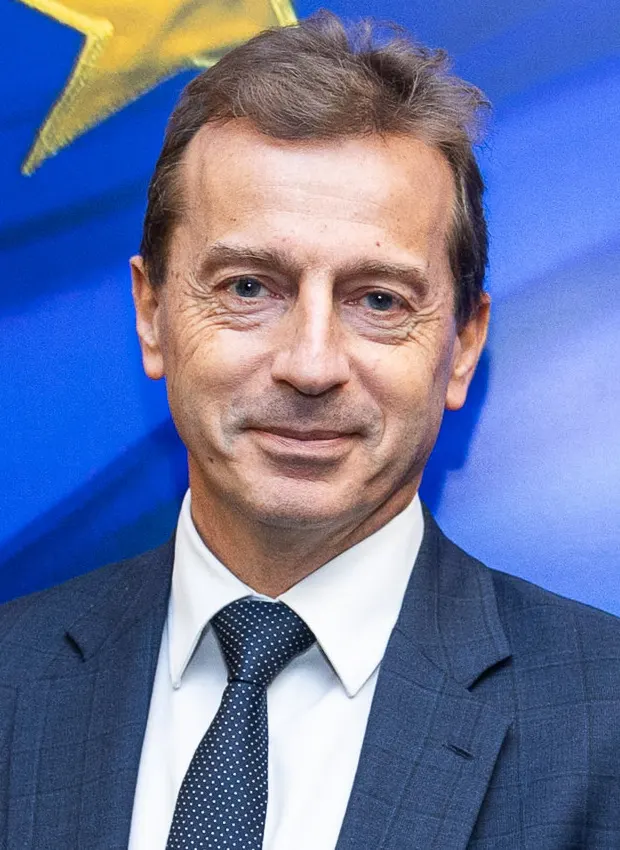
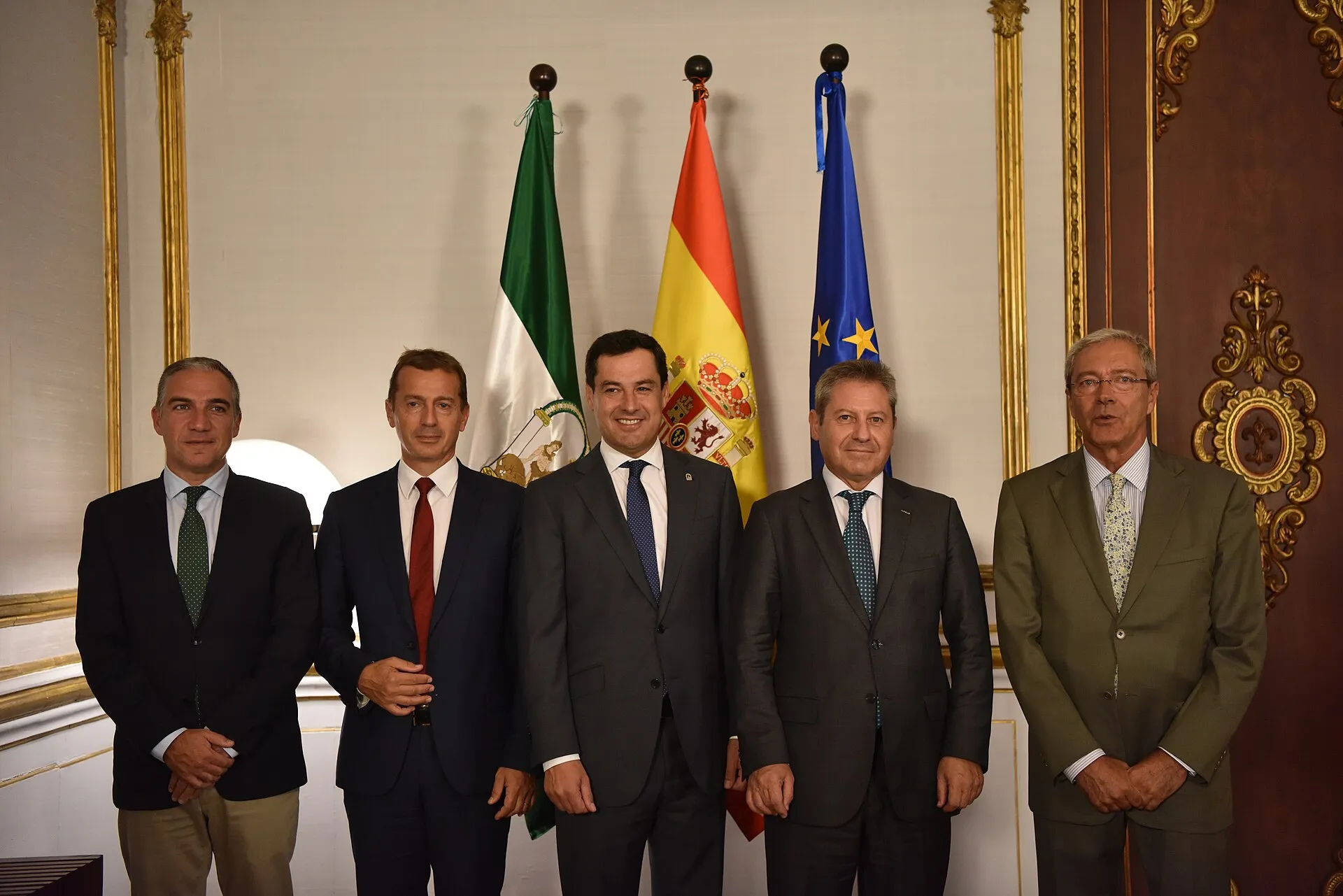
Photo: Xavier Lejeune / Wikimedia Commons, CC BY 4.0
How Guillaume Faury steered Airbus through its post-pandemic recovery
From helicopter engineer to chief executive of Airbus, the company that became the largest airliner maker in 2019. The career and decisions behind it.
Airbus became the largest airliner maker in 2019. It had long been the world's leading helicopter maker before that. The same year, Guillaume Faury became its chief executive, after a career that began in helicopter engineering.
Faury was born on 22 February 1968. He is a French engineer and businessman, and he is chief executive of Airbus SE and chairman of Airbus SAS, the civil aircraft division. The company designs and manufactures commercial aircraft, and it also runs Defence and Space and Helicopters divisions as separate units. The recovery from the COVID-19 pandemic was led by Faury. Airbus delivered 766 aircraft in 2024 against 878 orders, a 4% rise on the previous year, according to reports published in January 2025.
Education and early career
Faury attended the Lycée François 1 in Le Havre. He went on to the École polytechnique in Paris and graduated in 1990. In 1992 he graduated from the École Nationale Supérieure de l'Aéronautique et de l'Espace in Toulouse. He is a certified light-aircraft pilot and a helicopter flight-test engineer. He has logged more than 1,300 flying hours.
His early career was at Eurocopter, now Airbus Helicopters, where he spent about ten years. He became chief engineer for the EC225 and H225 and was responsible for heavy helicopter flight tests. He then rose to the post of executive vice-president covering research and development at Eurocopter.
In 2010 he joined the car maker Peugeot as executive vice-president for research and development. The same year he was made a knight of the National Order of Merit.
From Airbus Helicopters to the top job
In March 2013 Faury succeeded Lutz Bertling as chief executive of Airbus Helicopters. He held the post until 2018. At Airbus Helicopters he restructured the X4 programme, which led to the H160 medium helicopter, with introduction planned for 2019.
He also launched development of the X6, which is described as the fly-by-wire follow-on to the Super Puma. The division also began research programmes on the high-speed X3 Racer and on CityAirbus. The sources give no dates for either programme.
In February 2018 he took over from Fabrice Brégier as chief operating officer of Airbus Commercial Aircraft. On 8 October 2018 the board picked him as Tom Enders's successor. The Airbus Board of Directors made that choice. He became chief executive of Airbus on 10 April 2019.
The challenges he faced on taking over included the company's response to Boeing's New Midsize Airplane, A320neo production and operations, the A400M negotiations, and slower-selling models such as the A330neo.
The company Faury leads
Airbus Industrie was established as a consortium, the GIE, in 1970. It was set up to build wide-body aircraft that could rival American airliners. The A300 followed in 1972. The A320 launched in 1987 and was the first commercial jet with digital fly-by-wire.
In 2000 the parent firms merged into EADS, which later took full ownership of Airbus Industrie. EADS was rebranded as Airbus SE in 2015, the year the A350 was introduced. The A350 was the first largely carbon-fibre-reinforced polymer Airbus aircraft.
The company gained control of the Bombardier CSeries in 2018, and the aircraft was rebranded as the A220. The A220 is newer than the A320, which was launched in 1987. By October 2025 the A320 had overtaken the Boeing 737 as the airliner with the most deliveries.
Airbus has assembly sites and offices in France, Germany, Spain and the UK. Its newer facilities include locations in India, Morocco, the United States, Malaysia and Canada. Its legal seat is Leiden in the Netherlands, while day-to-day management is in Blagnac, France.
Airbus shares have been listed in Paris and Frankfurt, and on four Spanish exchanges, since 2000. The company is a constituent of the EURO STOXX 50.
Career timeline
- 1990
Graduates from the École polytechnique in Paris
He completes his degree at the École polytechnique in Paris.
- 1992
Graduates from an aerospace school in Toulouse
He completes his aerospace studies at a school in Toulouse.
- 2010
Joins Peugeot as executive vice-president for R&D
He moves to the car maker Peugeot as executive vice-president for research and development.
- 2013
Becomes chief executive of Airbus Helicopters
He succeeds Lutz Bertling as chief executive of Airbus Helicopters in March.
- 2018
Becomes Airbus Commercial Aircraft chief operating officer
He replaces Fabrice Brégier in February, and the Airbus board selects him as Tom Enders's successor in October.
- 2019
Takes over as chief executive of Airbus
He becomes chief executive of Airbus on 10 April 2019, the year it became the largest airliner maker.
- 2022
Reappointed chief executive for three years
He was reappointed chief executive for the next three years at the 2022 AGM.
Key numbers
- Aircraft delivered by Airbus in 2024, up 4% on the previous year
- 766
- Orders received by Airbus in 2024
- 878
- Flying hours logged by Faury, as a pilot and flight-test engineer
- over 1,300
How he leads
Development of a hydrogen-fuelled, environmentally friendly aircraft is among his priorities. The recovery after the COVID-19 pandemic was led by Faury. In 2024 Airbus delivered 766 aircraft from 878 orders, up 4% on the previous year.
He led the company's recovery after the COVID-19 pandemic. At the 2022 AGM he was reappointed chief executive for three years. He is also a member of the European Round Table for Industry.
His route to the top ran through research and development at two companies and commercial aircraft operations at Airbus. The sequence moved him from engineering and research into commercial aircraft operations before he took charge of the whole group.
Lessons for leaders
- Move leaders through engineering, research and operations before the top job. Faury ran research and development at two companies and commercial aircraft operations at Airbus before becoming chief executive.
- Restructure a programme rather than starting again. Faury restructured the X4 work, which led to the H160 medium helicopter.
- Pair near-term delivery with a long-term technology goal. Development of a hydrogen-fuelled, environmentally friendly aircraft continued while Faury led the recovery from the pandemic.
- Review each product's sales record openly when you take over. Slower-selling models, such as the A330neo, are among the challenges named for his mandate.
- Plan the next mandate early. Faury was reappointed for three years at the 2022 AGM. In our view, a fixed term like that settles leadership for a defined period.