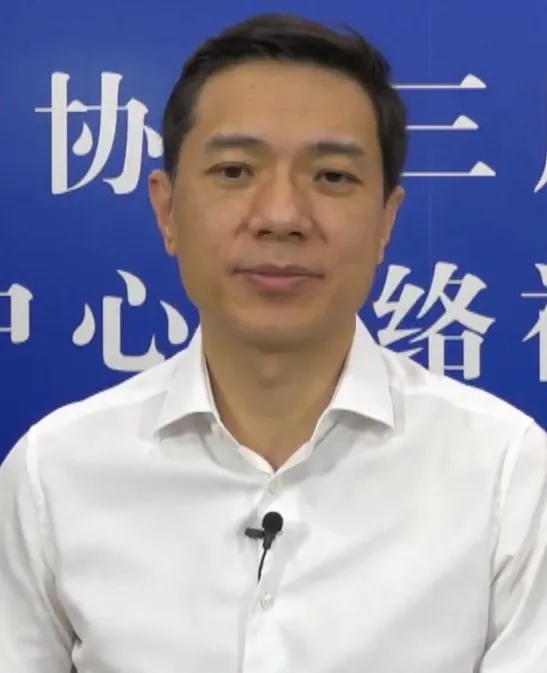
Photo: 中国新闻社 / Wikimedia Commons, CC BY 3.0
How Robin Li built Baidu into China's leading search engine
Li wrote a link-based ranking method at a Dow Jones unit, co-founded Baidu in Beijing in 2000 and ran it as chief executive from 2004.
A 1996 US patent covered RankDex, a method that ranked websites by the inbound links they received. The method was called link analysis, and it predated PageRank. Robin Li devised it while working on search software at IDD Information Services in New Jersey, and the same ranking idea later passed into the search engine of Baidu, the company he co-founded in Beijing.
Li and Eric Xu co-founded Baidu, and the company was incorporated on 18 January 2000. A biographical reference on Li says Baidu has held over 80 per cent of Chinese search by query under his leadership. The reference gives no date for the figure. Li has led the company as chief executive since January 2004.
From Dow Jones to Infoseek
Li studied at Peking University, where he earned a bachelor's degree in management, majoring in information management. From the fall of 1991, he pursued doctoral study at the University at Buffalo, where the subject was computer science. He left that programme in 1994 with a master's degree.
In 1994 he joined IDD Information Services, a unit of Dow Jones based in New Jersey. Between 1994 and 1997 he helped build software for the online Wall Street Journal edition and worked on search-engine algorithms. In 1996 he created RankDex, a site-scoring algorithm that ranked pages in search results.
From July 1997 to December 1999 he worked as a staff engineer at Infoseek. There he built a picture search function used by Go.com. Readers may find it useful to compare his Infoseek work with what Baidu later built, though the sources do not link the two.
Building Baidu from Beijing
Baidu's headquarters are in Haidian District, Beijing. The company used a Cayman Islands variable interest entity to enable foreign investment, a structure that set the basis for its later listing. The incorporation date is 18 January 2000.
In 2001 Baidu began letting advertisers bid for ad space on a pay-per-click basis, and a reference profile of the company says the model predates Google's approach. In 2003 Baidu launched news search and picture search engines, widening the range of content users could find.
Baidu began trading on NASDAQ on 5 August 2005, via its Cayman structure. Baidu Baike, a user-edited encyclopedia, was founded in 2006. In 2007, according to Chinese government and industry sources cited in a reference profile of the company, Baidu received a licence from Beijing to operate as a full news website, reportedly the first Chinese search engine so licensed. In December 2007 it became the first Chinese company in the NASDAQ-100 index.
Baidu's first regular service outside China was a Japanese search service, launched in 2008 and closed on 16 March 2015. Before that closure, the company launched the Brazilian search engine Baidu Busca on 18 July 2014 and acquired the local e-commerce site Peixe Urbano on 9 October 2014.
Decisions that shaped the company
In July 2012 Baidu announced a mobile search partnership with Sina. In November 2012 it agreed a partnership with Qualcomm that offered free cloud storage to Snapdragon Android users. In August 2013 it launched a Personal Assistant app aimed at managers and white-collar workers. In our reading, each move took search into devices and services that users already used.
Baidu named Andrew Ng its chief scientist in May 2014, and he leads Baidu Research in Silicon Valley and Beijing. The appointment placed a research leader over Baidu Research in Silicon Valley and Beijing.
In April 2017 Baidu announced the Apollo autonomous-driving platform, covering vehicle, hardware, open-source software and cloud data. In June 2017 it partnered with Continental and Bosch on automated driving. In September 2017 it announced a $1.5 billion autonomous-driving fund for up to 100 projects over three years. Baidu has diversified into autonomous driving through Apollo, smart electronics through Xiaodu, and an AI stack more broadly.

- 1994
Joins IDD Information Services
Li joins IDD Information Services, a New Jersey unit of Dow Jones, after leaving his doctoral programme with a master's degree.
- 1996
RankDex patent granted
A US patent is granted for RankDex, a site-scoring method that ranks sites by inbound links, which a reference profile says predated PageRank.
- 2000
Baidu incorporated
Li and Eric Xu incorporate Baidu on 18 January 2000; the company is now headquartered in Haidian District, Beijing.
- 2004
Becomes chief executive
Li becomes chief executive of Baidu in January 2004, a role he has held since.
- 2005
Listing on NASDAQ
Baidu begins trading on NASDAQ on 5 August 2005, via its Cayman Islands variable interest entity.
- 2017
Apollo platform announced
Baidu announces the Apollo autonomous-driving platform in April 2017, followed by a $1.5 billion fund in September.
- 2023
Named in Time's AI list
Li is named in Time's 100 Most Influential People in AI in September 2023.
- Share of Chinese search by query under Li's leadership, undated, from a biographical refer
- over 80%
- Autonomous-driving fund announced by Baidu in September 2017, for up to 100 projects over
- $1.5 billion
How Li has organised the company
Official statements of Li's own management priorities are not part of this profile, so this section describes what Baidu has done rather than what Li has said. The Japanese search service, the company's first regular service outside China, launched in 2008 and was closed on 16 March 2015 after about seven years.
Baidu gave its research a named senior leader. In May 2014 it appointed Andrew Ng as chief scientist, and he leads Baidu Research in Silicon Valley and Beijing. Its autonomous-driving work carries its own name, the Apollo platform, announced in April 2017, and a $1.5 billion fund followed in September 2017. In our judgement, the Ng appointment and the Apollo platform show one way to divide the work: each has its own identity, which makes its results easier to read separately.
Li's public roles reach beyond the company. In August 2014 the UN Secretary-General appointed him co-chair of an expert advisory group on the data revolution for sustainable development. From 2013 to 2018 he served on the national committee of the CPPCC. His recognition includes the 2018 Pioneer of Reform award, and he was also named one of 100 Outstanding Private Entrepreneurs recognised over the period of Reform and Opening-up.
Lessons for leaders
- Build the core method first and document it early. Li's RankDex work was patented in 1996, years before the company that later used it existed.
- Attach a revenue model to the product in its first year. Baidu let advertisers bid for ad space on a pay-per-click basis in 2001, a year after it was incorporated.
- Test new markets with a small, dated service and be ready to close it. Baidu's Japanese search service ran from 2008 until March 2015.
- Bring in a senior scientist who can run his own research labs. Baidu's 2014 appointment of Andrew Ng as chief scientist placed research in Silicon Valley and Beijing under one leader.
- Stage large bets with a fixed budget and a clear end date. Baidu's $1.5 billion autonomous-driving fund was set to back up to 100 projects over three years.