Tasos Vasiliadis and the Beam Across Larissa
Twenty years ago he rented a small office in a Greek farming town to help villagers start businesses with European money. Now he owns an innovation park in a converted metalworkers’ shed, in a region Brussels ranks near the bottom for innovation, and he is selling the model abroad.
Office of the Prime Minister (via iefimerida)
Chapter one: The Headset
On 24 February 2023 the Prime Minister of Greece, Kyriakos Mitsotakis, stood in a room in Larissa called the Future Learning Lab and lowered an augmented-reality headset over his eyes. Around him were 3D printers and the small robots DuckyCode makes to teach children to code. When the tour moved on, according to the park’s account of the day, a robot named Joy guided the party past a coworking floor “full of working professionals” to a virtual-reality game built to help adolescents with autism practise social skills.
The building is JOIST Innovation Park, a former industrial shed a few minutes’ walk from Larissa’s central square. Afterwards the Prime Minister said something that would have been unremarkable almost anywhere else in the country. “We do not often associate it with Larissa, as it is primarily known as a city that deals with the agricultural sector,” he said, in the park’s English rendering of his remarks. “The fact that it is becoming a centre of innovation with competitive actions, not only in Greece but globally, is highly encouraging.”
iefimerida’s report of the visit named the people who showed him round. One was the park’s owner and president, Tasos Vasiliadis, a Larissa man with a doctorate in entrepreneurship and education who had spent the previous eighteen years running an institute that lived on European research and training grants. He had bought the building in 2020. The park had opened nine months before the Prime Minister arrived.
The sentence about agriculture is the problem JOIST was built to answer, and the European Commission’s own figures show how large it is. In the Regional Innovation Scoreboard published in 2025, Thessaly, the region around Larissa, performs at 68.1 per cent of the EU average and ranks 189th among the regions measured. Nineteen per cent of its employment is in agriculture and mining, against under 4 per cent for the EU. Its GDP per head, adjusted for purchasing power, is about half the EU average. On one indicator, the share of the workforce employed as ICT specialists, Thessaly scores 4.9 on a scale where the EU average is 100. JOIST’s own literature, unusually for promotional copy, concedes the point: the park, it says, “has an essential task in a predominantly agricultural area with low innovation intensity.”
Vasiliadis’s wager, made twice now, is that innovation in a place like this is not something a region waits to be visited by. It is infrastructure, like a road or a roof, and somebody has to pay for it and hold it up. He named the company after the piece of timber that does exactly that. “In English, the word ‘joist’ refers to a structural element that supports and stabilises a construction,” he told HuffPost Greece in March 2025. “For us, JOIST Innovation Park works in a similar way.”
A beam is judged by what it carries. This portrait, drawn from the public record, looks at what Vasiliadis has built, what it rests on, and what has yet to be shown. The park publishes no accounts. Several of its superlatives are its own. And its founder is already carrying the model to Ioannina, Dublin and Brussels.
- Vasiliadis founds the Institute of Entrepreneurship Development in Larissa
- 2005
- Floor area of the converted industrial building that houses JOIST
- 1,800 m²
- Thessaly’s innovation performance vs the EU average (Regional Innovation Scoreboard 2025)
- 68.1%
- Share of Thessaly’s employment in agriculture and mining; EU average 3.7% (RIS 2025)
- 19.3%
Chapter two: A Small Office in the Centre
Vasiliadis has given few personal details in public. What is on record is the education: postgraduate degrees in educational studies and in marketing, and a PhD in entrepreneurship and education from the University of the Aegean, with research, according to his speaker biography, on how education and training contribute to entrepreneurship and on gender differences in entrepreneurial development. A 2025 profile in the national news site iefimerida describes what came next. Having finished his studies, he was looking for a business idea with a social purpose. He rented a small office in the centre of Larissa and, on 5 March 2005, founded the Institute of Entrepreneurship Development, iED, as a non-profit whose task was to help groups from remote areas set up businesses of their own.
The money came from Brussels. iED’s model, then and now, was to compete for European programme funding, join consortia with universities and companies across the continent, and deliver the training, business support and dissemination that such projects require. Its own retelling of the early years, published on its fifteenth anniversary, describes going to “the most remote villages”, training women who went on to start a small enterprise and give young people in the village “a reason not to migrate to the big cities or even different countries”. The account names no village and no business; it is the institute’s story about itself, and should be read as one.
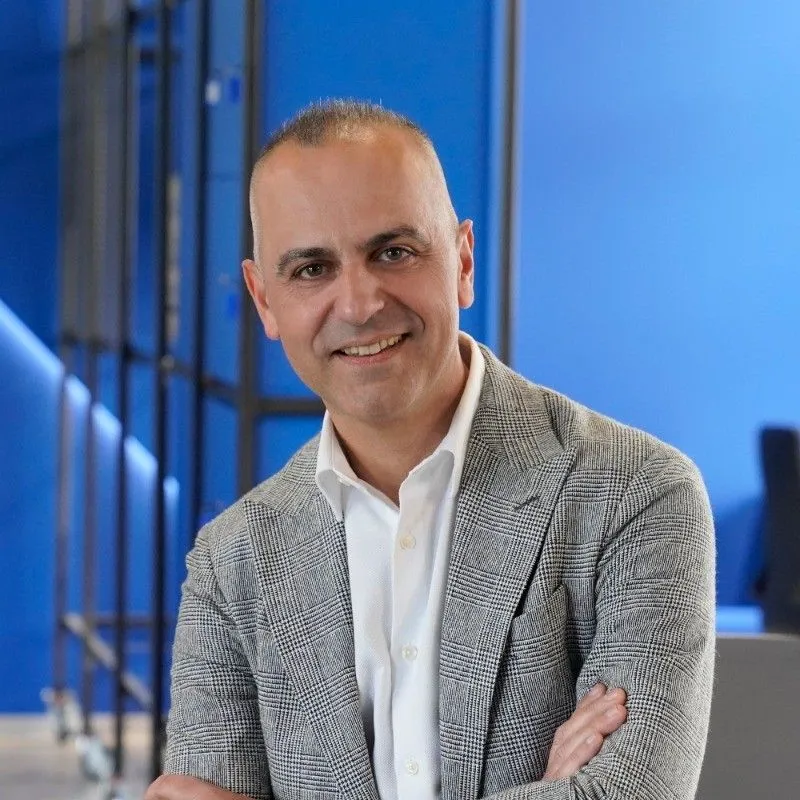
In Greece, there are many strong businesses. However, they are not able to provide young people with the opportunities they need to build their own future.
The clearest statement of his thinking from those years is an interview iED published in April 2019. Asked why he started the institute, he answered in a sentence: “I am a strong supporter of Entrepreneurship.” Entrepreneurship, he argued, “is a way to battle unemployment and to create new types of businesses with the potential of a great social impact.” He was candid about the work it took. “Our first experience with Horizon 2020 was the Liverur project that started in 2018,” he said of the EU’s flagship research programme. “It was a big enough challenge for us because we had never taken part in something so big before.”
He was also asked why iED hired so many young people when it could have hired experienced ones. “Young people may not have the experience of the older professionals but they can certainly acquire it as well as contribute to the promotion of a business, through innovation,” he said. In a country where, by one later estimate, more than a million people of working age left between 2010 and 2022, most of them aged 25 to 44, an employer in Larissa recruiting graduates was making a small argument with large stakes. His stated ambition was blunt. “My vision for the future is simple. Growth.”
The growth came. By its own count iED had 27 staff and more than 2,500 partners in 2020. By March 2023 it had 45 employees in five departments, had implemented more than 300 EU-funded projects and trained over 14,000 people. It also coordinated Health Hub, the European Digital Innovation Hub for Thessaly, which focuses on digital health and pharmaceuticals and holds a Commission Seal of Excellence. iefimerida reports that by the end of the 2010s the institute had managed projects worth more than €30 million. Its website now claims more than 450 EU-funded projects and offices in Greece, Cyprus and Estonia.
That record is the foundation everything else stands on, and it carries a known weakness: European projects produce reports, platforms and pilots whose results often go unused once the funding ends. iED’s website now lists among its principles that “outputs are built to be used, not archived”, a promise that doubles as an acknowledgement of what the sector is accused of. JOIST, in one reading, is Vasiliadis’s attempt to give the work a permanent address.
Career timeline
- 2005
Founds the Institute of Entrepreneurship Development (iED) in Larissa (5 March)
- 2018
iED’s first Horizon 2020 project, LIVERUR
- 2020
Buys the former Larissa metalworkers’ cooperative building
- 2022
JOIST Innovation Park opens (19 May)
- 2023
Prime Minister’s visit (24 February)
iED reaches 45 staff and 300+ EU projects; first mission to India
- 2025
JOIST Innovation Space Ioannina operating
JOIST holds the presidency of the South East European science and technology parks alliance
- 2026
Innovent Forum across five Larissa venues
partnerships with the Hellenic Development Bank and Dublin’s Sandyford Business District; a building bought in Brussels
Chapter three: The Metalworkers’ Shed
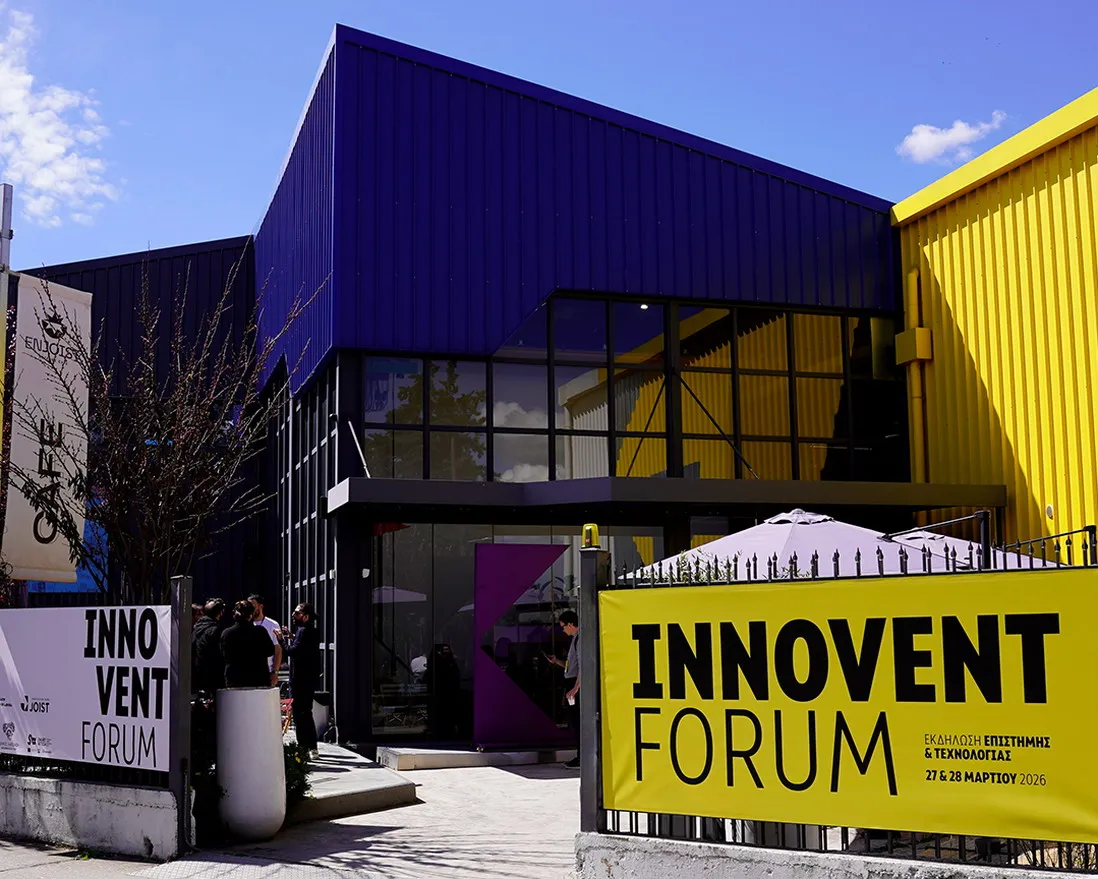
The building Vasiliadis bought in 2020 had belonged to the cooperative of Larissa’s metalworkers. The business site Powergame, visiting in early 2023, described it as a former machine workshop of the city’s aluminium businesses. It is two storeys of steel and corrugated cladding, now painted purple and yellow, arranged around an internal square in what was the workshop’s atrium. Timber amphitheatre steps rise from that square. According to the park, the conversion reused materials and machinery from the building’s earlier life, partly to cut the energy footprint and partly to keep visible what it calls “the industrial heritage of Larissa”. The floor area is 1,800 square metres.
JOIST opened on 19 May 2022 with a hybrid conference titled “Innovation Parks as Models for Strengthening Regional Ecosystems”. Christos Dimas, then the deputy minister for research and innovation, gave the keynote; the round table included the head of the Heidelberg technology park and the executive director of Sofia Tech Park; Vasiliadis sat on it as founder. The money behind the building was private. Powergame reported in February 2023 that it had cost €4 million so far. A 2024 report in mononews put the investment plan at €5 million and said there was no external financing; iefimerida, in 2025, wrote of an investment of more than €3 million. The figures may measure different things at different times; none comes with accounts attached.
What Powergame recorded in 2023 was the business logic, reported in Vasiliadis’s name rather than quoted directly. The centre had seven revenue streams and, at full operation, would have fourteen. The primary goal was to make it a profitable activity and then to export the know-how to other Greek cities or abroad. The streams are visible on the park’s website: desks and offices, registered addresses for tax purposes, conference rooms, children’s coding classes, adult training, a Makers Space, paid innovation-management and funding advice, an online marketplace for technology suppliers, and annual forums with sponsors.
Some of the anchors are public. The building houses PYTHEIA, one of Greece’s ten state-backed competence centres, which works on digital health; the government says its spending on the competence-centre programme has passed €8.3 million. It houses Health Hub. Its biggest event, the Innovent Forum, is co-organised with the University of Thessaly and the municipality. A privately owned park that rents to public programmes is a common model in Europe; it also means that the line between JOIST’s commercial income and the grant economy iED grew up in is not easy to see from outside.
The decision was bold, because innovation ventures usually concentrate in the big urban centres, but we believe that the future of innovation depends not on geography but on opportunities and the right infrastructure.
He has defended the choice of city in practical terms. “The choice of Larissa was not random,” he told HuffPost Greece. “It sits in the centre of Greece, in a strategic location that makes it easier to connect different regions and business ecosystems.” Speaking to CNN Greece in November 2026, he said that moving the work to another city had never been an option, and that a Thessaly company could grow internationally if it had access to the right knowledge, partners and markets.
The Commission’s data suggest where that access is thinnest, and where it is not. Thessaly’s weakest indicators are the supply of ICT specialists, adult participation in lifelong learning (at about a fifth of the EU level) and broadband. Its strengths are surprising: on spending on innovation other than R&D it ranks fourth among all the regions in the Scoreboard, and its small firms introduce new products at well above the EU rate. What has fallen sharply since 2018 is the share of innovative small firms collaborating with others. A region of very small companies (2.8 employees per enterprise, against 4.9 in the EU) that innovates alone is precisely the market a matchmaking business is built for. Vasiliadis gave CNN Greece an example: a Thessaly firm wanted to use its trucks’ capacity better, JOIST connected it with a research centre, and the loading algorithm that resulted, he said, saves it hundreds of thousands of euros a year. The firm was not named.
The park’s claims about itself are larger than the evidence published so far. Its website calls it “the biggest Innovation Park in Southeast Europe”. The government’s own press office, in July 2025, described it more modestly and more precisely as the first private innovation-transfer park in Greece. Its homepage counts “500+ partners” and “150+ members”. Its entry in the directory of the International Association of Science Parks and Areas of Innovation, where JOIST is a full member, says it is home to 129 companies and covers 175,000 square metres, a figure that cannot describe an 1,800-square-metre building and should be treated as an error until JOIST explains it. None of this is unusual for a young organisation selling itself. It does mean that, three and a half years in, the basic measures (occupancy, revenue, companies founded and still trading) are not public.
Chapter four: Exporting the Beam
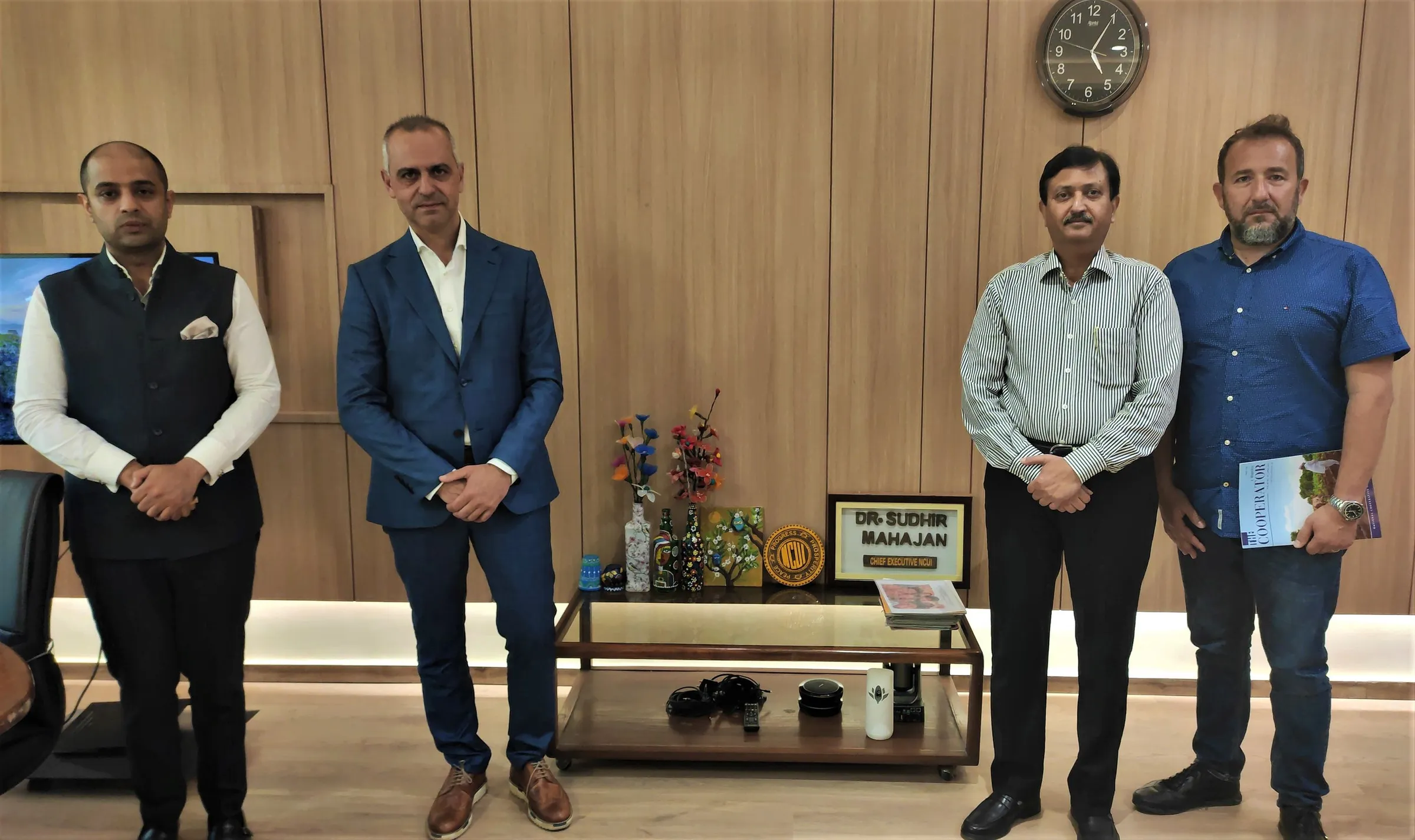
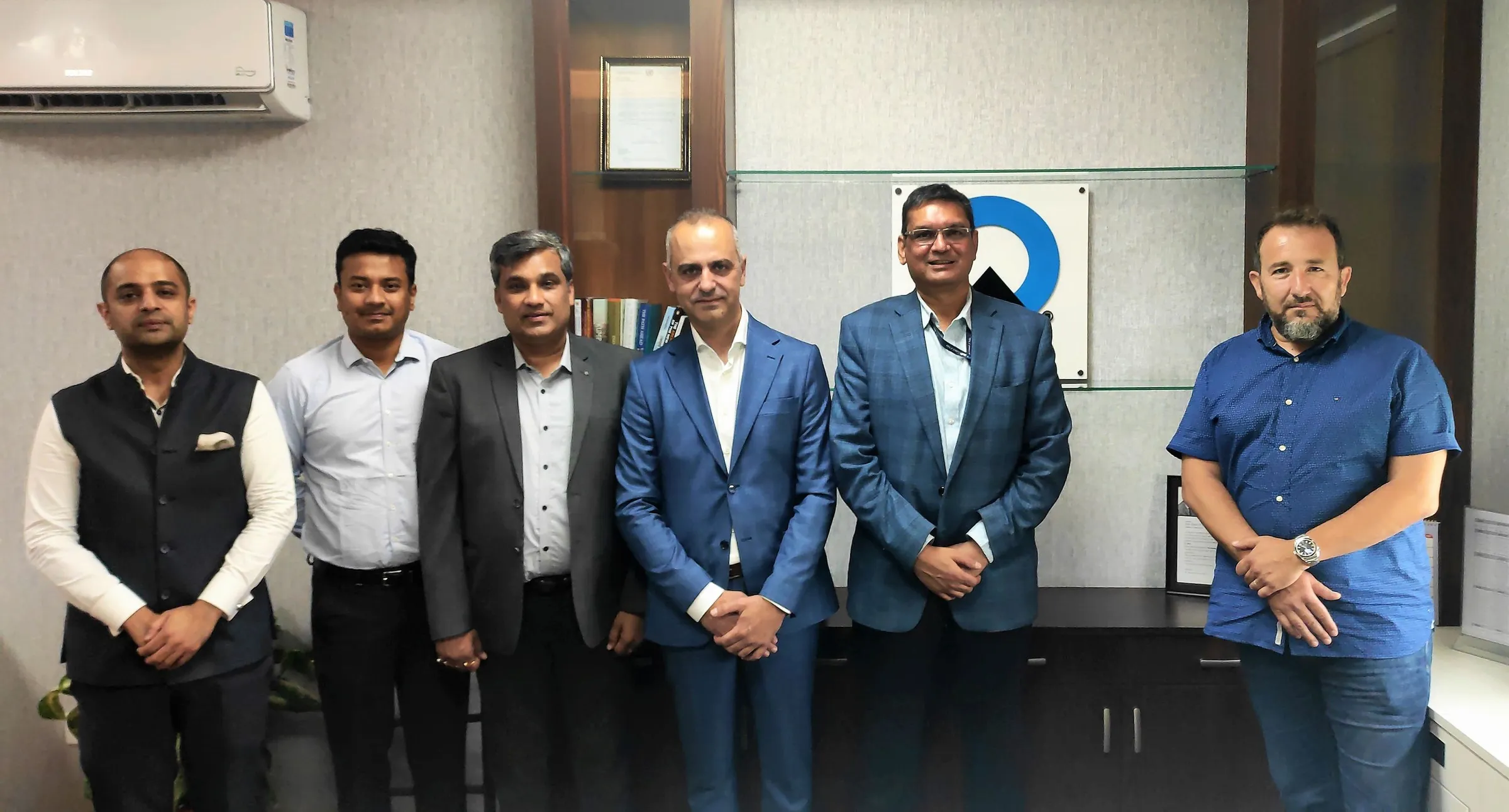
Vasiliadis did not wait for the first park to prove itself before starting the second. In May 2023, a year after opening, he and JOIST’s vice-president, Antonis Kiritsis, made what the park called a “long stay” in India, introduced by the Greek embassy to officials and business people in New Delhi; they brought Thessalian wine as gifts. By 2025 a joint venture, VJoist Innovation Private Limited, had been formed with Variman Global Enterprises, with the aim of opening a first physical space in India that year; we found no public confirmation that it has opened. In June 2023 he signed a memorandum with the Paris incubator Creative Valley at Station F. In October 2024 he joined a Silicon Valley programme run with EIT Digital. In April 2025 he went to Mauritius to study the feasibility of a JOIST hub there, meeting the minister for information technology.
Closer to home the expansion has been more concrete. JOIST Innovation Space Ioannina, in Epirus, operates with the Hellenic Institute of Packaging and Safety of Agrifood Products in a renovated building that once housed a wood cooperative. In a December 2025 case study JOIST said that in under two years it had worked with more than 15 startups and SMEs, held more than 15 events and reached more than 500 pupils and students. In 2025 JOIST held the rotating presidency of an alliance of science and technology parks from Greece, Serbia, Bulgaria, Romania, Turkey and Montenegro, and hosted a South East European Innovators Challenge in Larissa. In September 2026 it signed a cooperation memorandum with the Hellenic Development Bank. In October Vasiliadis spoke at the International Innovation Summit in Dublin and agreed to help Sandyford Business District, a cluster of around 1,000 companies, plan its Innovation Campus.
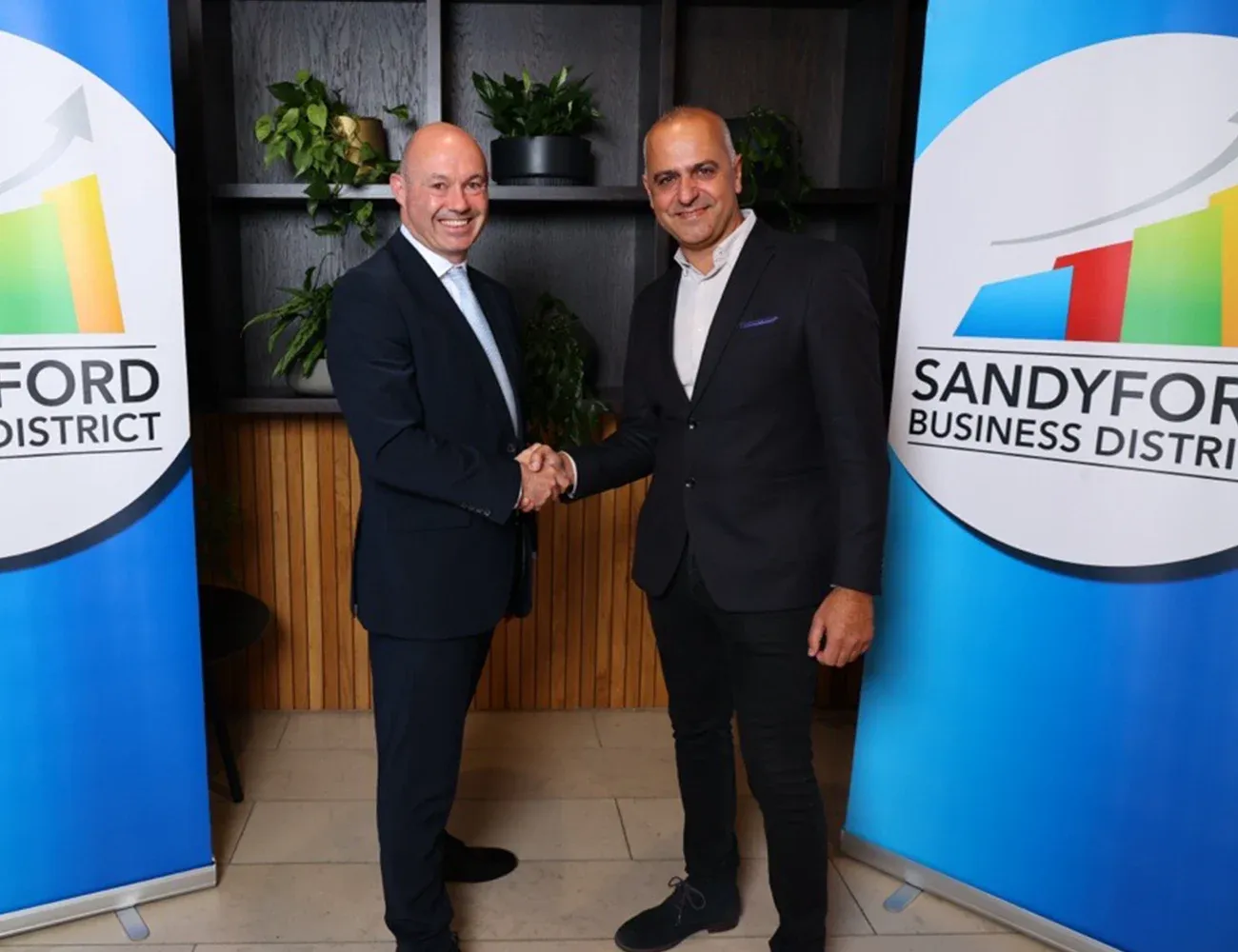
The largest step is in Brussels. In April 2026 JOIST’s director of networks and development, Kostis Karazisis, told Powergame that JOIST and Tittan, a Dutch technology park, had secured a four-storey, 1,000-square-metre building near the Commission and would open an “A.I. & Robotics House by JOIST” by November, with some 200 staff from four European bodies working on AI, robotics and smart cities as anchor tenants. In November Vasiliadis told CNN Greece that the building had been bought, with investors. Whether those tenants have signed, and on what terms, is not yet public.
The method for spreading the model is a franchise. JOIST now offers investors, foundations and universities a packaged “Innovation Park or Space”, with operating manuals, architectural plans and training, and says most partners can open within three to six months. Its smallest unit is the Future TechBox, a ten-square-metre capsule combining 3D printing and virtual reality with a guided digital diagnosis of a company’s needs, which was named among the ten finalists of the international science-park association’s Inspiring Solutions awards in 2026. “Our aim is for JOIST to become a model of innovation park that expands, is reproduced and strengthens the local and international ecosystem,” Vasiliadis told HuffPost Greece.
The context helps him. Greek startups raised more than €732 million across 95 rounds in 2025, according to the investment platform Found.ation, with a record 18 active venture funds. Greece’s R&D intensity rose by 0.7 percentage points between 2014 and 2024, one of the largest gains in the EU, reaching 1.53 per cent of GDP against the EU’s 2.2 per cent. Greece as a whole sits at 75.8 per cent of the EU average in the European Innovation Scoreboard, up 15 points since 2018 though slightly down on 2024. Filippos Zakopoulos of Found.ation sees “a small trend toward brain gain”.
The context also contains the warnings. Greek R&D spending rose in 2024 while the number of researchers, measured in full-time equivalents, fell by 6.9 per cent. Innovation performance remains uneven: Attica scores 85.1 on the regional index, Thessaly 68.1. And the model JOIST is franchising has an awkward feature for anyone trying to judge it. The original, privately owned and still young, has not published what it earns, what it costs, or how many of the companies it hosted are still trading. Onlarissa, a local news site, published a headline this month crediting the project with revenue of €9 million; we could not access the article, and we do not know whether the figure refers to JOIST, to iED or to both.
Innovation and entrepreneurship must have the support of the state. So far JOIST has had a positive response, but there is still some way to go before initiatives like this are properly built into national development strategies.
That request sits at the centre of the story. Vasiliadis built JOIST with private money and has insisted on its independence, yet its anchors are a European hub, a state-funded competence centre and a university forum, and he wants national strategy to make room for parks like his. Neither position is contradictory. A private beam can carry public weight. But the more public weight it carries, the stronger the case for publishing the figures that show how it is doing.
The questions for the next few years are concrete. Will the Brussels building fill with the tenants announced for it? Will the franchise attract operators who are not already partners? Will the park show, with numbers, that companies founded or helped in Larissa have grown, hired and stayed? And can an organisation that grew up writing European grant proposals live on rent, services and memberships when the next funding cycle turns?
At the Innovent Forum in March 2026, spread across five venues in the city, Vasiliadis described the aim simply. “We want to show that our city is one of the most innovative cities,” he told Thessalia TV, “not only in Thessaly, not only in the country, but at European level.” Showing is the right verb. A joist sits inside the floor, out of sight. Nobody inspects it until they need to know whether it will hold.