Tom Meehan and the Problem of Proof
For thirteen years he investigated theft inside Bloomingdale’s. Now he runs CONTROLTEK, a 50-year-old New Jersey maker of cash bags and store alarms, at a moment when shoplifting is falling, fraud is climbing and video itself is becoming harder to believe.
Will Ellis / design by Avison Young (via Office Snapshots)
Chapter one: The Pedestal
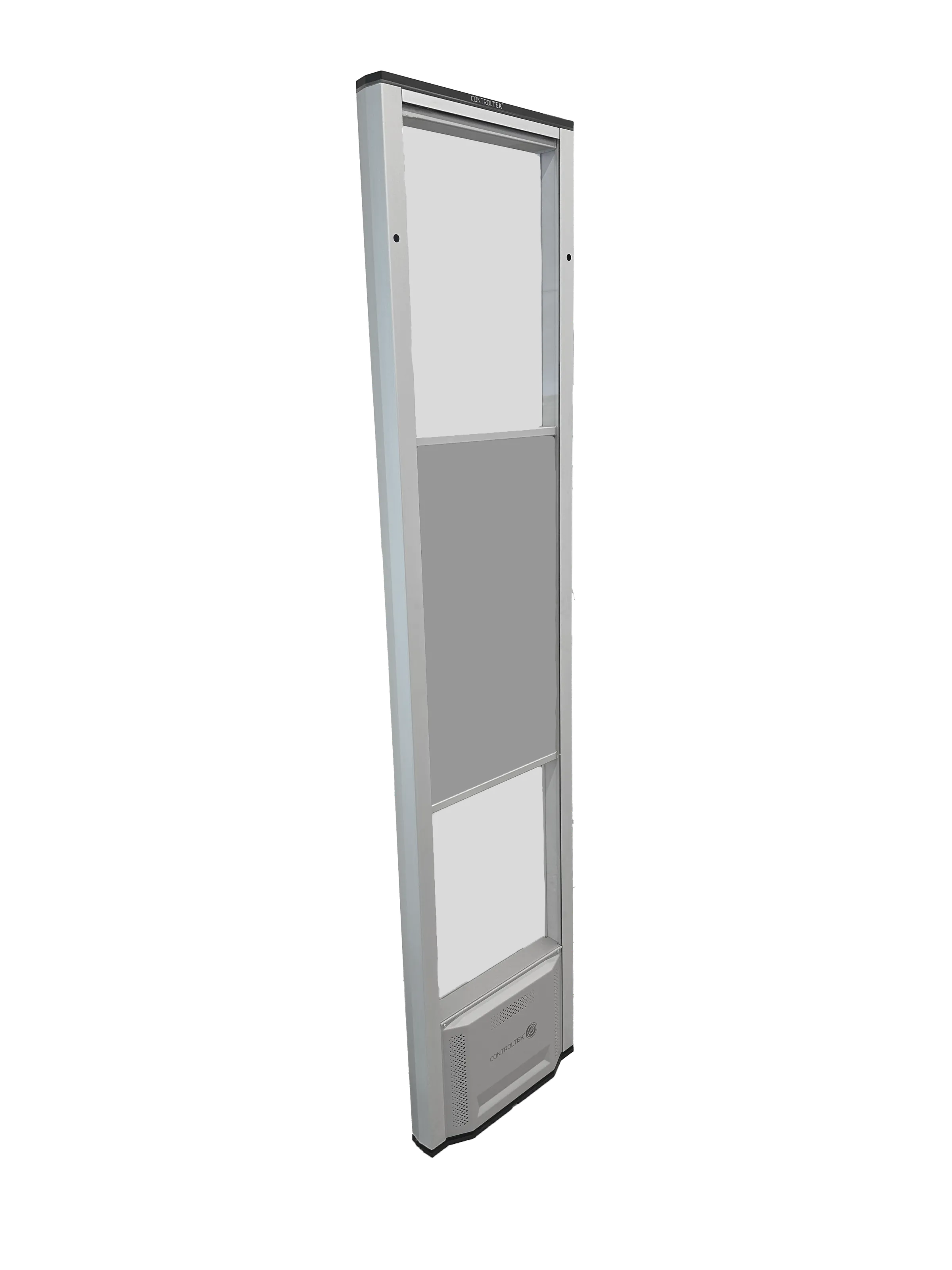
Most large shops have a pair of them: pale pillars standing either side of the exit, far enough apart that a customer walks between them without a second glance. They are electronic article surveillance pedestals, and for most of their working life they have done one thing. A security tag that was not removed or deactivated at the till passes through the field between them, and they alarm.
What the alarm cannot do is say who set it off. It reports that something left the building. An associate looks up; the person with the bag keeps walking, or stops; the noise ends. The camera in the ceiling may have caught the moment from above, at an angle that shows a cap, a hood, the top of a head.
In June 2026, at NRF PROTECT, the National Retail Federation’s annual loss-prevention conference, a privately held company from Bridgewater, New Jersey, won the Loss Prevention Research Council’s Product Protection Summit award for “Advancements in EAS”. The product was SAM2CAM: an EAS pedestal with a covert camera built into it, which ties each alarm to eye-level facial imagery of whoever triggered it. A door-mounted sibling, SAMDCAM, covers store layouts where a pedestal will not fit. The company’s chief executive explained the product in two sentences.
Retailers told us they didn’t need more cameras. They needed better evidence.
The same release recorded the question behind it, one Meehan said the company “heard repeatedly from our retail partners: ‘How do we get a better face shot?’” Stores had no shortage of cameras. What they lacked was a usable picture at the single point every departing customer must pass, taken at the instant the store had reason to want one.
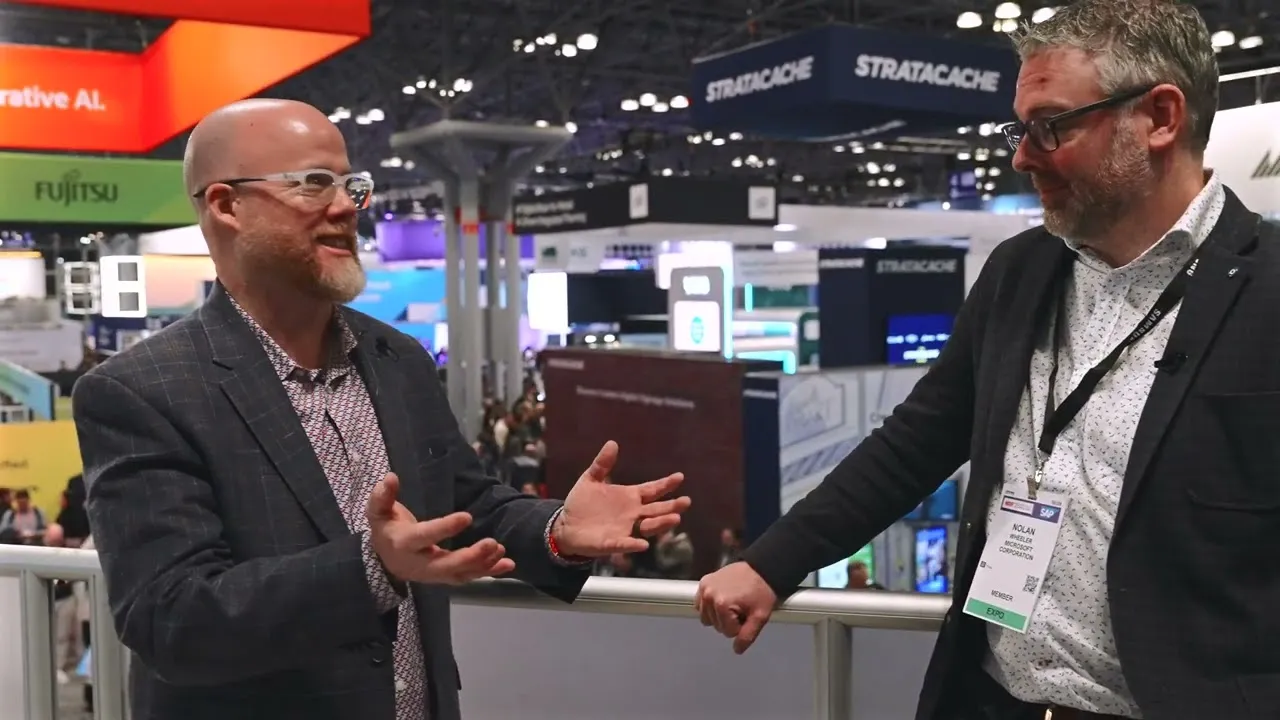
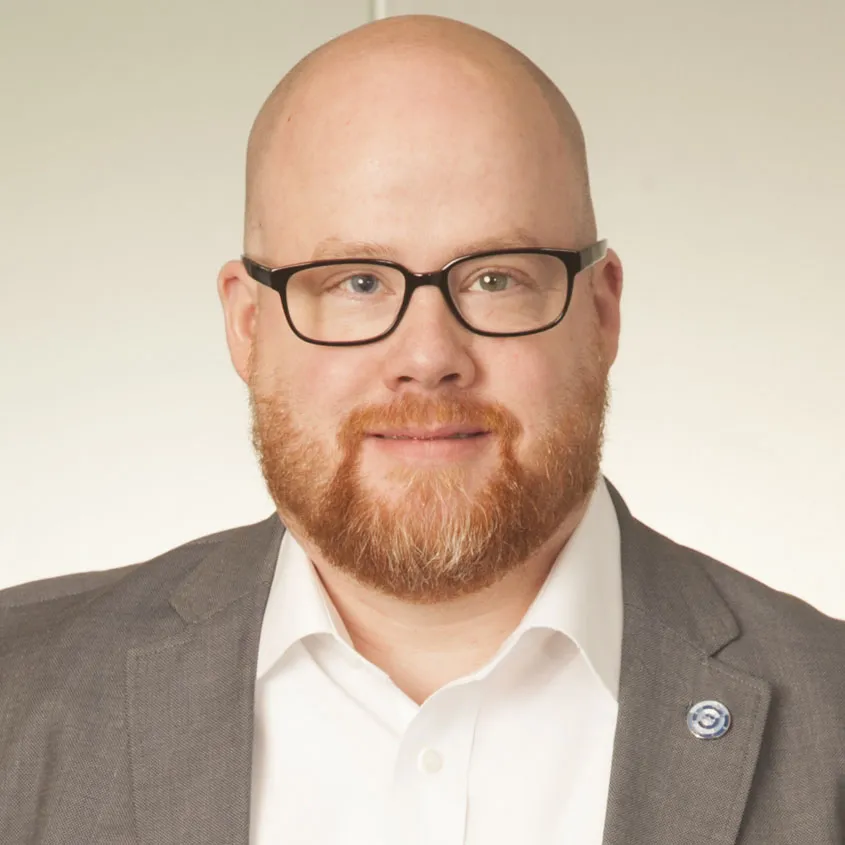
Tom Meehan, who signs his name with the letters CFI for Certified Forensic Interviewer, has been CONTROLTEK’s chief executive since 1 August 2024. He took the post from Rod Diplock, of the family that founded the company in 1976; Diplock is now listed as Founder and Advisor. Meehan did not come up through manufacturing. He came up through loss prevention, the department inside a retailer that investigates theft, runs the cameras and interviews suspects, including suspects who work there. For most of his career he was the customer for products like the ones he now sells.
That vantage point explains the company’s direction better than any mission statement. Nearly everything CONTROLTEK makes is a way of producing evidence. A tamper-evident cash bag shows whether it has been opened between the shop and the bank. A tag shows whether an item was paid for. An RFID read shows what is on the shelf. A camera in the pedestal shows who walked out. Meehan’s tenure has arrived at a moment when each kind of proof is under strain: the industry’s theft figures are disputed, the crime is shifting from the shelf to the phone line, and generative AI has made a photograph less persuasive than it was five years ago.
This portrait is drawn from the public record: his bylined columns, his conference sessions and podcasts, the company’s press releases and the industry research his products are sold against.
- CONTROLTEK founded; its 50th anniversary was marked in March 2026
- 1976
- Meehan’s tenure at Bloomingdale’s before he joined CONTROLTEK
- 13 years
- Interviews and interrogations he estimates he has conducted
- 1,000+
- Change in shoplifting incidents reported by retailers, 2025 vs 2024 (NRF/LPRC, 2026)
- −12.4%
Chapter two: Thirteen Years at Bloomingdale’s
Meehan’s published biographies are brief about his early years, and he has not filled in the dates in public. His speaker profile for the Association for Corporate Growth’s New Jersey chapter lists loss-prevention work at The Home Depot and “various technology, loss prevention, and operational roles at several other companies.” The substantial chapter came next: a 13-year tenure at Bloomingdale’s, where, according to CONTROLTEK’s 2022 announcement of his promotion, he was responsible for “physical security, internal investigations, asset protection systems and data analytics.”
That list is worth reading slowly. Physical security means doors, locks, guards and cameras. Internal investigations means employee theft, the part of loss prevention that department stores discuss least in public. Asset-protection systems means the tags, pedestals and video infrastructure a retailer buys from suppliers. Data analytics means trying to find, in transaction logs, the pattern that a person on the shop floor cannot see. He held all four at once, at a luxury department store.
The work that seems to have marked him most is the interview. In October 2025 he wrote a column for Loss Prevention Magazine, where he is retail technology editor, explaining why, a decade after he first qualified as a Certified Forensic Interviewer in 2015, he had gone back to take the newer CFI Evolved course. “Over the course of my career, I’ve probably conducted over a thousand interviews and interrogations,” he wrote. “Interviewing was a true passion of mine—I read every book I could find on the subject and took every class available.”
The column is less a memoir than an argument. Its subject is the interviewing method taught by Wicklander-Zulawski, and its claim is that the method’s steps (establishing rapport, building credibility, listening actively) are habits for any conversation where the stakes are high, the boardroom included.

The theme here is clear: a structured, nonconfrontational approach to any conversation almost always leads to a better outcome.
In the same piece he put it more personally: “I’ve always seen myself as a lifelong learner, and what separates extremely successful people from the rest is their commitment to continual learning.” Two months later the headline of another of his columns made the case for recording investigative interviews on the grounds that it “protects retailers and employees alike”. An internal interview can end a career. A recording is evidence for both sides.
The move across the counter came in 2016 or 2017; the company’s own releases disagree. The 2022 announcement says he had been chief strategy officer and chief information security officer “for the past six years”; the 2024 announcement of his appointment as CEO says he had been “with CONTROLTEK since 2017.” Either way, a loss-prevention director became a supplier’s strategist, and he has talked about the shift directly: in 2020 he gave a session at the Global Retail Crime Summit titled “Lessons Learned: from Practitioner to Solution Provider.”
The second half of his title is easy to skip and should not be. A company best known for bank deposit bags appointed a chief information security officer, and the person in the role spent those years speaking on the digital end of retail crime: dark-web investigations at the Retail Industry Leaders Association’s Retail Law Conference in 2019, cryptocurrency at the Americas Cash Cycle Seminar the same year, and later cybercrime, organised retail crime and human trafficking at the New England Crime Analysis and Intelligence Conference in 2022.
In May 2019 CONTROLTEK announced his book, Evolution of Retail Asset Protection: Protecting Your Profit in a Digital Age, which went on sale on 11 June that year. In August he joined the board of the International Supply Chain Protection Organization. He became senior technology adviser to the Loss Prevention Research Council, the industry’s best-known research body, and co-hosts its CrimeScience podcast with Dr Read Hayes. In October 2022 he was promoted to president, with a stated aim: “I look forward to accelerating our momentum in positioning CONTROLTEK to become the number one solutions provider of asset protection, visibility and tracking in North America.”
Career timeline
- Before 2017
Loss prevention at The Home Depot
then a 13-year tenure at Bloomingdale’s covering physical security, internal investigations, asset-protection systems and data analytics (exact years not published)
- 2015
Qualifies as a Certified Forensic Interviewer
- 2016/17
Joins CONTROLTEK as chief strategy officer and chief information security officer
- 2019
Publishes Evolution of Retail Asset Protection
joins the board of the International Supply Chain Protection Organization
- 2022
Promoted to president
- 2024
Appointed chief executive officer (1 August)
- 2026
Joins the board of ZFLO Technologies and the advisory board of EAIGLE
named to NRF’s 2027 class of Retail Voices
Chapter three: A Bank-Bag Maker Turns Fifty
CONTROLTEK began in 1976 with tamper-evident packaging, originally designed to protect financial assets, and it still describes itself first as a maker of security packaging: the sealed deposit bags that carry cash from tills and branches to banks and cash-in-transit vaults. In 2022 it launched EcoLOK4, which it described as a tamper-evident cash deposit bag made from 90 per cent post-consumer recycled material. Retail EAS (the tags and pedestals) and RFID inventory systems came later and are now where the company’s announcements concentrate.
It is a family business that has handed the chief executive’s chair to someone from outside the family. Rod Diplock and John Diplock are listed as founders; Brian Diplock is vice-president of strategic sourcing and product development. The company is privately held, does not publish revenue, and gives its headcount on one professional-profile site as 51 to 250 employees. Since Meehan became CEO it has hired a chief financial officer, Brian Gross, and an executive vice-president for security packaging, Brad Moody, who joined in January 2025; Kim Scott is chief marketing officer and EVP of strategy.
Meehan’s claims for the company are large. In his October 2025 column he called CONTROLTEK “the largest manufacturer of cash protection tamper-evident bags—and the fastest-growing RFID and EAS provider in the world.” A company that publishes no revenue cannot easily be checked against a claim like that, and readers should treat it as his description, not a measurement. In a 2023 video for the trade publisher MarketScale, a CONTROLTEK speaker said the company had installed “over ten thousand RFID systems” in the previous four years.
The RFID argument is the most interesting part of the bet, because it has little to do with catching thieves. Research by Auburn University’s RFID Lab, reported in the trade press between 2014 and 2016, put store inventory accuracy at about 63 per cent without RFID and about 95 per cent with it. ABI Research forecasts that spending on UHF RFID will pass US$10 billion in 2030, with some 118 billion inlays shipped that year. In September 2026 CONTROLTEK joined the Auburn lab’s advisory board. Meehan’s line in the announcement was plain: “RFID is creating new opportunities for organizations to understand what they have, where it is and how it’s moving.” It is the language of operations, not security. A retailer that knows where every unit is will also notice faster when one goes missing.
The cash business keeps him in a second argument. Meehan hosts The Cash News Podcast with Brad Moody and Shaun Ferrari, which had reached about 90 episodes by late 2026 and returns repeatedly to payment choice and to cash in emergencies; a July 2026 episode on hurricane season drew on his own experience of Hurricane Sandy. In 2020 he gave a talk at the Americas Cash Cycle Seminar titled “COVID and the Irrational Fear of Cash.” It is also true that the company he runs makes the bags cash travels in. The two facts point the same way, which does not make the argument wrong, but it is something a reader should know.
The practice that most distinguishes CONTROLTEK from a conventional hardware vendor is the design-thinking workshop. The company has run them for Rite Aid, at that retailer’s innovation centre in December 2023, and for Circle K, among others. At NRF PROTECT 2026 Meehan shared a stage with Millie Kresevich, EssilorLuxottica’s vice-president of asset protection for North America, and Kimberly Price, its director of asset protection, to describe what came out of a day-and-a-half workshop CONTROLTEK facilitated for them in November 2024.
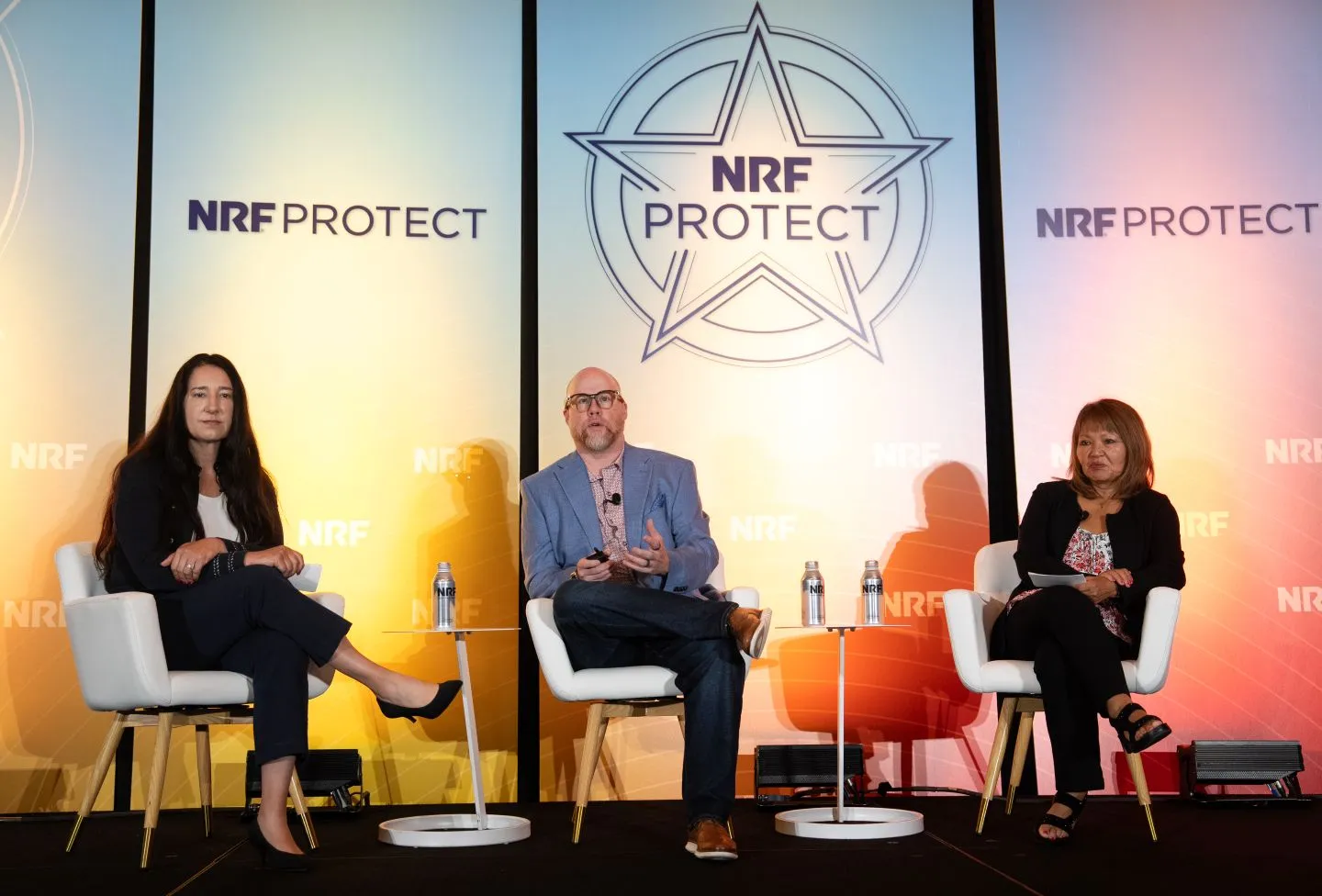
The problem, as NRF’s account of the session describes it, was mundane and expensive. EssilorLuxottica’s asset-protection field staff each cover about 300 stores, and they were fielding the same calls again and again: how to use the camera system, how to burn a video, what to do after a shoplifting incident, when to call the police. The answers existed, in a toolkit employees had to log in to and search. The result of the workshop was B.E.C.K.I. (“Business solutions, Education, Communications, Knowledge and Intelligence”), an AI “virtual asset protection manager” that store staff can simply ask.
Meehan opened his remarks with the obvious question about why a supplier does this at all. “I get this question probably more than anything: Why does CONTROLTEK facilitate design thinking workshops?” His answer: “We want to be partners for the industry. We want to move the industry forward.” He also described what the role demands: “If you’re doing this process, you need a partner that’s going to drive it, that’s going to ask, and is going to remind you that it’s iterative.”
There is a commercial reading, and it need not be cynical. A supplier that runs the room where a retailer defines its problem learns what to build before its competitors do. SAM2CAM, by the company’s own account, came from listening to the same complaint repeated by customers. The workshop is a way of hearing that complaint earlier, and in more detail.
Chapter four: The Liar’s Dividend
The numbers Meehan’s industry sells against have moved sharply, and they need handling with care.
The National Retail Federation’s 2023 security survey put US retail shrink, the gap between recorded and actual inventory, at US$112.1 billion for 2022, up from US$93.9 billion a year earlier, with theft accounting for about 65 per cent of it. That was the last edition to give a dollar figure. Subsequent NRF and Loss Prevention Research Council studies reported a 93 per cent rise in average shoplifting incidents between 2019 and 2023, and a further 18 per cent rise in 2024. Then the line turned. In the study published on 30 July 2026, retailers reported a 12.4 per cent fall in shoplifting incidents in 2025 and an 8.1 per cent fall in merchandise theft, and credited their investment in security.
The same study recorded the crime moving elsewhere. Sixty-nine per cent of retailers reported an increase in phone scams, 51 per cent in loyalty fraud and 42 per cent in gift-card theft or fraud. Half saw more repeat offenders. A camera at the door cannot see a cloned loyalty account.
Police data complicates the picture again. The Council on Criminal Justice found that shoplifting reported to police in large US cities in the first half of 2026 was 5 per cent above the same period of 2019, the only one of the 13 offences it tracks still above its pre-pandemic level. Meanwhile 63 per cent of retailers in the NRF study said they report fewer than half of store theft incidents to the police. And the NRF figures come from surveys of large retailers (66 companies, representing 143 brands, in the latest round), not a national measure. The trade publication Retail Dive has questioned how representative they are. An industry that sells evidence works from statistics that are themselves contested.
Behind the statistics are the people who hear the alarm. In the 2023 survey, 67 per cent of retailers said violence and aggression from organised retail crime offenders had increased year on year. In the 2026 study, the measures retailers said they were investing in to prevent violence included management training (72 per cent) and employee training (65 per cent). One logic of putting the camera in the pedestal is that it gathers evidence without asking an associate to step in front of anyone.
It also raises questions a buzzer never did. A covert camera at face height records whoever sets off the alarm, and EAS alarms are triggered by customers whose tags a cashier forgot to remove as well as by thieves. Who sees those images, how long they are kept, whether they are shared between retailers or with police, whether they ever meet facial-recognition software: the company’s public material on SAM2CAM, as reviewed for this piece, does not address these points. They are fair questions for any retailer installing one.
Meehan has written about a harder version of the same problem. In December 2025 his Loss Prevention Magazine column took up the “liar’s dividend”, a phrase from legal scholarship for the advantage a deceiver gains once convincing fakes exist: genuine evidence can be dismissed as fabricated. For investigators the threat cuts two ways. A deepfake can be offered as proof; a real recording can be waved away as one. The column dealt with chain of custody, the record of who handled a piece of evidence and when, which matters more as images become easier to forge.
At the end of the day, the liar’s dividend isn’t just about how reality could be faked. It’s about making everyone doubt the truth altogether.
It is an unusual thing for the head of a company that sells cameras to put in print. His other recent writing keeps the same sceptical distance from his own sector’s enthusiasms. In August 2026 he asked in print whether there is an AI bubble. On the Truth Be Told podcast in 2025 he discussed bias in AI systems and the risk of investigators leaning too hard on automation. SmartPost Z, which the company calls its next-generation platform, combines EAS, RFID, AI video analytics and people counting; the man selling it has spent much of the past eighteen months cautioning investigators against over-reliance on automation.
His public commitments are growing. In June 2026 he joined the board of ZFLO Technologies, an RFID company, and the advisory board of EAIGLE. In September the NRF named him to its 2027 class of Retail Voices, and he is due at NRF 2027: Retail’s Big Show in New York in January. “I believe progress happens when people are willing to share ideas and challenge each other to think differently,” he said in the announcement.
The questions for his tenure are concrete. Can CONTROLTEK turn its RFID installations into the kind of inventory accuracy the Auburn research promises, at the scale of a national chain? Can it sell face-level cameras into a world increasingly anxious about faces being collected? And can a company whose products exist to prove what happened stay credible as proof itself becomes easier to doubt?
The oldest thing CONTROLTEK makes is still the clearest statement of what it sells. A tamper-evident bag does not stop anyone from opening it. It makes sure that, if someone does, everyone afterwards can tell.