Brad Gintz and the Fight Over the Port
A fourth-generation Louisiana mechanic built a phone-linked key to the truck’s computer. For five years the United States argued in court that it was used to strip out emissions controls. The case is over. The question it asked is still open.
EZ LYNK (via ezlynk.com)
Chapter one: With Prejudice
The document that ended it ran to a single paragraph. On 10 July 2026, the US Attorney’s Office for the Southern District of New York filed a stipulation stating that United States v. EZ Lynk, SEZC was “voluntarily dismissed, with prejudice” against every defendant: the company, a sister company called Prestige Worldwide, and the two men who founded them, Thomas Wood and Bradley Gintz. Each side would bear its own costs. The case had been open for five years and four months.
Eighteen days later EZ LYNK put out a press release from George Town, Grand Cayman, where it is incorporated. It called the dismissal “a win for drivers and right-to-repair” and said the government’s suit had “fundamentally misunderstood” its products. Gintz, the company’s co-founder and chief executive, put it in terms of the people he sells to.
Every driver deserves to know what’s wrong with their vehicle and to choose who fixes it, whether that’s a dealership, an independent shop, or in their own driveway.
The independent automotive outlet Backfire read the docket and wrote the sentence the press release left out: “Nobody on the bench ever ruled that EZ Lynk’s product was legal.” Nobody ruled that it was illegal either. A dismissal with prejudice means the government cannot bring the same claims against the same defendants again. It is not a verdict, and it settles no law.
What the case was about is easier to state than it was to decide. The Clean Air Act requires manufacturers to fit vehicles with on-board diagnostic systems, computers that watch the emissions equipment, record a fault code when something fails and tell the driver to get it repaired. The government’s complaint describes the diagnostic system as part of the emissions controls in its own right. To reach it, a mechanic plugs a tool into the vehicle’s diagnostic port. The port was put there so that emissions faults could be found and fixed. It is also how almost every modern repair begins, and how an engine’s software can be rewritten.
Brad Gintz has built a company on that port. EZ LYNK’s Auto Agent plugs into it and talks to a phone app, which talks to EZ LYNK’s cloud. A technician in another state can then read the vehicle’s data while it is being driven, and, on supported vehicles, write new software to it. To Gintz this is what the right to repair looks like when cars are computers. To the Environmental Protection Agency, for five years, it was something else. The argument between those two readings is the most important one in the American repair business, and Gintz has spent the past decade inside it.
This portrait is drawn from the public record: his interviews and bylined articles, EZ LYNK’s announcements, the court filings, and the industry research his products are sold against. He has not been interviewed for it.
- Diesel pickups with emissions controls removed in the decade to 2020 (EPA estimate)
- 550,000+
- Average age of a US light vehicle in 2025, a record (S&P Global Mobility)
- 12.8 years
- Truck repair and maintenance cost per mile in 2025, up from 19.8¢ (ATRI)
- 21.5¢
- From complaint (8 March 2021) to dismissal (10 July 2026) in US v. EZ Lynk
- 5 yrs 4 mos
Chapter two: The Lot
Gintz tells his own origin story in the language of the repair bay. “I come from four generations of hardworking mechanics,” he told the interview series Authority Magazine in April 2026. “I grew up in southwest Louisiana under the hood, learning how to diagnose the tough problems.” He worked in the family repair shop “alongside my dad, my grandfather, and my great-grandfather”, and the shop’s reputation, as he describes it, rested on the jobs other people had given up on: “We were known for repairing the ‘unrepairables’ — solving the issues even dealerships couldn’t diagnose.”
His website adds that he learned the trade “outside the confines of formal education”. His birth year, the family shop’s name and his years in it are not on the public record.
The problem that led to EZ LYNK is one every mechanic knows, and the most specific thing he has said about his early working life.
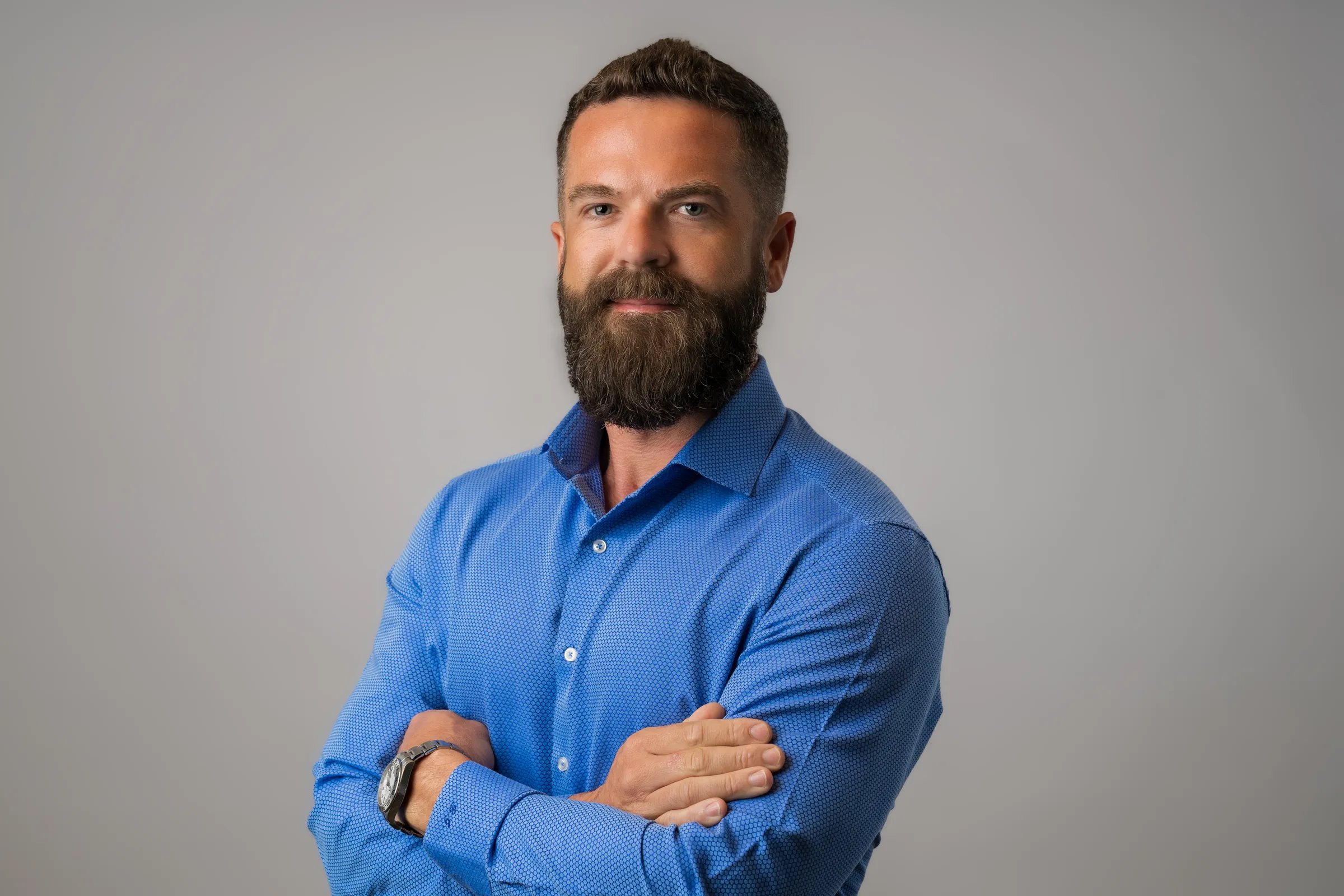
There was one common frustration we couldn’t escape: customers’ vehicles would act up, but by the time they reached our lot, they’d run fine. We were stuck playing diagnostic guesswork.
The intermittent fault is a cost problem as much as a technical one: every test drive that fails to reproduce it is unpaid time. In a bylined article for Fleet Management Weekly in July 2025 Gintz returned to it in fleet terms: “Far too often, a driver will flag something odd about the vehicle, but the symptom is no longer present by the time the vehicle is taken into the shop.”
His answer came from outside the trade. “I thought, If I can video call someone anywhere in the world, why can’t I connect to their vehicle the same way?” The phrase he uses for the result in a March 2026 article for Vehicle Service Pros is telehealth: a remote expert reads the patient’s vital signs while a local practitioner does the hands-on work. “In other words, the diagnostic ‘doctor’ no longer needs to be in the building,” he wrote; “the tool brings that expertise directly to the vehicle, wherever it happens to be.”
Building it took longer than he expected. “When we were building EZ LYNK, we failed over 100 times before we got it right,” he said, and described the moment of thinking he had “cracked the code — only to realize the solution worked in theory but not in the real-world chaos of actual vehicles.”
The argument he makes for the product is about price and access as much as engineering. Dealer-grade diagnostic equipment is expensive, and much of it is proprietary to one manufacturer. “Instead of needing a $12,000 scanner or proprietary equipment,” he said, “even small-town or backyard mechanics can access high-level diagnostic power.” His example of where disruption is justified is small and pointed: a system that ends up “forcing someone to pay $300 to program a $20 key because only proprietary equipment can do it.”
The same interview contains the most personal passage he has published. Asked about a talk that had shaped him, he described instead “the internal conversation I had when I decided to drop the labels I had been living under: ‘I’m poor,’ ‘I’m stuck,’ ‘I’m waiting to be saved.’” He links that to the causes he supports: Aerial Recovery, a disaster-response and anti-trafficking organisation that works with veterans and first responders, and A Second U Foundation, which trains formerly incarcerated people as certified personal trainers. “Everyone deserves a real second chance,” he said.
There is another account of his years before EZ LYNK, and a profile has to include it. The government’s 2021 complaint alleged that since at least 2010 Gintz had owned a Louisiana business, Calvin’s Auto Repair, that sold and installed aftermarket devices that disable emissions controls, and that “for years before the launch of EZ Lynk, Gintz himself personally installed defeat devices on his customers’ trucks.” Those were allegations in a case that ended without any finding, and he has not addressed them in public. Whether Calvin’s is the family shop of his interviews is not on the record. They are among the first questions we would put to him.
Timeline
- Before 2014
Works in his family’s repair shop in southwest Louisiana
later runs his own shop (dates not published)
- 2014
EZ Lynk formed as a Cayman Islands special economic zone company (July, per court filings)
- 2016
The EZ Lynk System launches
Gintz and co-founder Thomas Wood file the patent application for real-time wireless engine-computer monitoring and reprogramming
- 2018
Auto Agent 2.0 goes on sale
- 2021
The United States sues the company and both founders under the Clean Air Act (8 March)
- 2024
A federal judge dismisses the main claim on Section 230 grounds (March)
Drivewyze weigh-station bypass added to the EZ LYNK ELD app (October); Canadian ELD certification (December)
- 2025
Highway location verification (May)
the Second Circuit revives the case (20 August); OBD-port software updates for 2020–2025 Ford Super Duty trucks (27 August)
- 2026
Case dismissed with prejudice by stipulation (10 July)
Chapter three: A Pipe With Two Ends
The product at the centre of the case had three parts, and the courts described them in the same way. The Auto Agent is a device that plugs into a vehicle’s diagnostic port. The Auto Agent App connects it to the EZ Lynk Cloud. The cloud stores software files called “tunes”, which drivers download through the app and install. EZ LYNK did not write most of those tunes. Independent technicians did, using a free cloud-based program the company provided, and uploaded them to storage space it supplied.
Some tunes change shift points, throttle response or fuel delivery. Others, called “delete tunes”, reprogram a diesel engine to run with its exhaust after-treatment removed: the particulate filter, exhaust-gas recirculation and urea injection that cut soot and nitrogen oxides. EPA’s Air Enforcement Division estimated in November 2020 that emissions controls had been removed from more than 550,000 diesel pickups in the previous decade, about 15 per cent of those originally certified with controls. Over the trucks’ lifetimes, it said, the excess nitrogen oxides would equal adding more than nine million compliant diesel pickups to American roads. The estimate drew on 45 delete-tune product lines from 28 companies.
On 8 March 2021 the then Acting US Attorney in Manhattan, Audrey Strauss, sued EZ Lynk, Prestige Worldwide, Gintz and Wood on the EPA’s behalf. “EZ Lynk has put the public’s health at risk by manufacturing and selling devices intended to disable those emissions controls,” she said at the time. The complaint alleged that the system had enabled “many thousands of drivers” to delete emissions controls; that EZ Lynk staff had “liked” and “loved” forum posts in which owners described doing so and had given them technical help; and that before launch the company had previewed its system for two tuning firms whose delete tunes were later distributed through it. One of them, the Louisiana tuner PPEI, pleaded guilty in a separate criminal case in 2022 and agreed with its owner to pay US$3.1 million in criminal fines and civil penalties. The complaint also accused EZ Lynk of refusing to give EPA information about the product.
EZ LYNK has always given a different description. Its position, set out in the July 2026 release, is that its products “are content-neutral pass-through scan tools, which are encouraged and indeed mandated under the Clean Air Act”, and that they “level the playing field for independent shops, drivers, fleet operators, farmers, and backyard mechanics”. The company’s website carries a line to the same effect: the vehicle functions it exposes “are available in a vehicle’s OnBoard Diagnostic system and are not created or made available by EZ LYNK”.
The case turned on that distinction, and on a law written for the internet. In March 2024 Judge Mary Kay Vyskocil found that the government had plausibly alleged the system was a “defeat device”, but dismissed the claim under Section 230 of the Communications Decency Act, the statute that shields online platforms from liability for what their users publish. The tunes were third-party content, she reasoned, and EZ Lynk merely made them available. A coalition including the Electronic Frontier Foundation, the Consumer Technology Association and NetChoice filed a brief supporting EZ Lynk when the government appealed.
On 20 August 2025 the Court of Appeals for the Second Circuit disagreed. It accepted that the complaint adequately alleged a defeat device, and held that it also plausibly alleged EZ Lynk had “directly and materially contributed to” the creation of delete tunes, which would put the company outside Section 230’s protection. The judges were careful about what they were deciding. They held only that the allegations, taken as true, did not entitle the defendants to immunity: “Discovery may reveal additional facts that refute those allegations.” The government, for its part, had by then dropped with prejudice its separate claim that the company had withheld information from EPA.
Discovery, when it came, was about users. In the spring of 2026 the government subpoenaed Apple, Google, Amazon and Walmart for the names, addresses and purchase records of people who had downloaded the Auto Agent app or bought the device, saying it needed witnesses. Forbes reported that the requests covered at least 100,000 people. EZ Lynk’s lawyers objected that requests “for potentially hundreds of thousands of people’s PII go well beyond the needs of this case and create serious privacy concerns”. In its July release the company called the attempt to identify its users “a gross overreach that EZ Lynk fought in court and won”. Backfire’s reading of the docket is narrower: a magistrate judge limited some of the requests as overbroad. Gintz added: “There was never a question about whether we’d stand by our customers. We always will.”
Then, in July, the case ended by agreement. The docket shows no judgment, no penalty and no published settlement terms. It also came six months after the Justice Department, on 21 January 2026, told prosecutors to stop bringing criminal cases over emissions-software tampering and to drop those pending, while keeping civil enforcement “when appropriate”. The EZ Lynk case was civil, and nothing in the public record connects its end to that memo. The policy climate around it had changed all the same.
The question the Second Circuit framed was never tried: when a platform carries software written by others into a vehicle’s computer, when does it share responsibility for what that software does? Every connected-car service that can rewrite an engine controller is, in that sense, a pipe with two ends.
Chapter four: Compliance, Sold by the Month
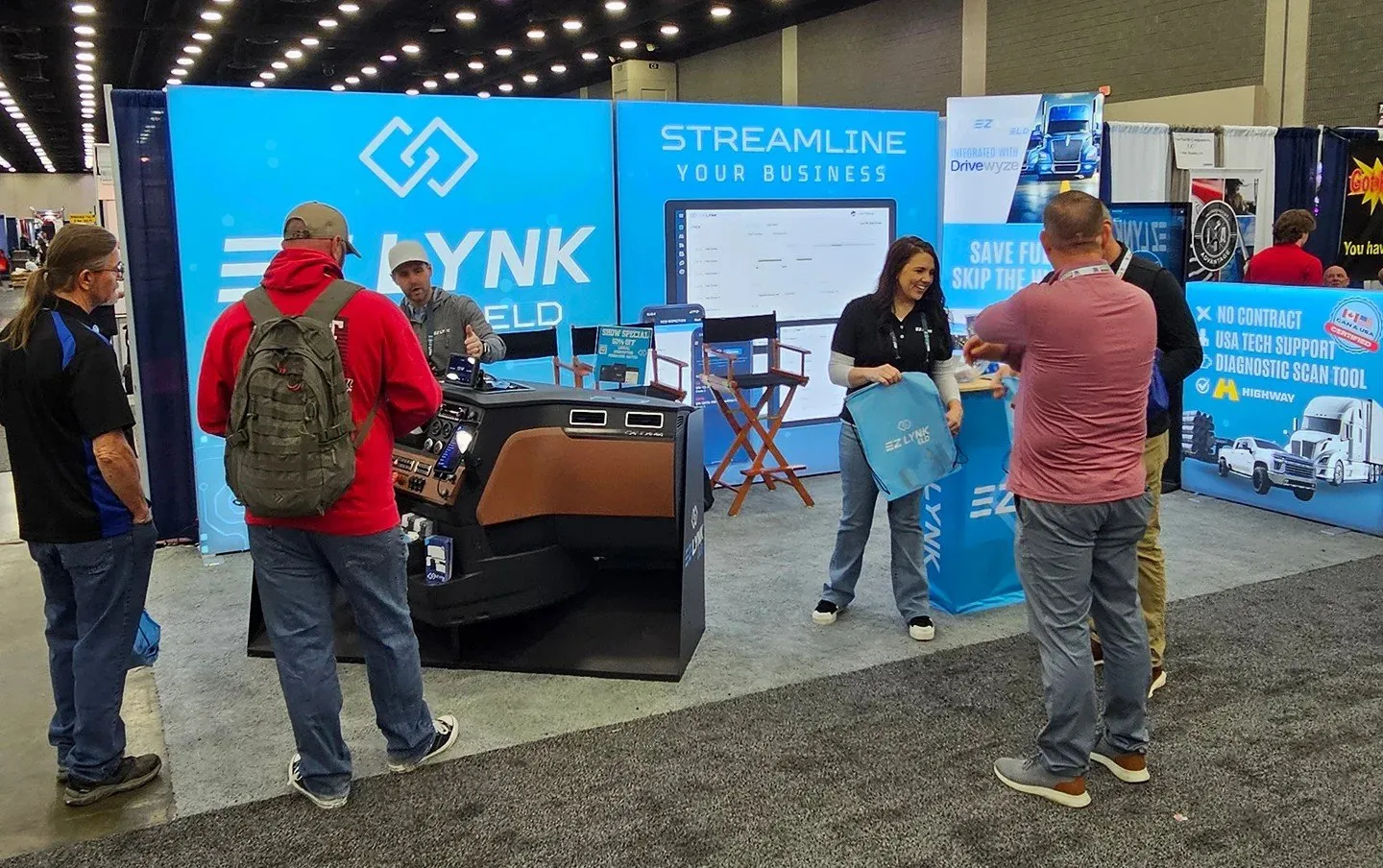
While the case went on, EZ LYNK built a second business in the most regulated corner of American road transport. Under the federal ELD mandate, commercial drivers in the United States must record their hours of service on an electronic logging device registered with the Federal Motor Carrier Safety Administration. EZ LYNK’s ELD runs on the Auto Agent 3 and a phone. In December 2024 it gained Canadian certification. That matters because Canada, unlike the United States, does not let ELD makers certify themselves: devices must pass a third-party certification body before they can be used.
The product’s selling points are the ones Gintz made in the repair bay, applied to fleets. There is no long-term contract; the hardware plugs in rather than being wired into the dash; the company says it designs and makes its own devices instead of relabelling someone else’s. In October 2024 it added Drivewyze’s weigh-station bypass, which lets trucks with good safety scores skip the scales at close to 900 sites. “We understand that in the logistics and transportation industry, time is money,” Gintz said. In May 2025 it added location verification from Highway, a service freight brokers use to guard against fraud by confirming that a carrier is where it says it is.
“We designed our ELD solution to go beyond compliance,” Gintz said when the app won an industry award in 2025. A February 2025 post under his name predicts that fleets will move to app-based logging on trucks’ own infotainment screens. “The days of standalone ELDs are numbered,” it says.
The economics behind the pitch are real. The American Transportation Research Institute’s latest survey put the average carrier’s repair and maintenance bill at 21.5 cents a mile in 2025, up from 19.8 cents, and its total operating cost at a record US$2.336 a mile. Berg Insight counts about 19.2 million active fleet-management systems in North American vehicles and expects 33.2 million by 2029; the five largest suppliers hold about half the market. EZ LYNK is not among the leading suppliers Berg names, and it does not publish customer numbers. It is a small entrant selling simplicity against much larger platforms.
The consumer side of the business went back to the port in August 2025, when EZ LYNK announced it could install software updates through the diagnostic port on 2020–2025 Ford Super Duty trucks, F-250 to F-550, without a dealer visit. “This is about restoring choice,” Gintz said. “Vehicle owners shouldn’t have to pay a premium or make an extra trip to the dealership just to keep their vehicles running as they should.” An independent shop owner in Tempe, Arizona, quoted in the release, said it let him do updates “that used to require a trip back to the dealership”.
Competition drives innovation for people, monopolization drives exploitation of people.
That is the right-to-repair argument in one sentence, and it has public support. In 2020, Massachusetts voters approved by about three to one a measure requiring carmakers to open wireless vehicle data to owners and independent shops. A year later the Federal Trade Commission told Congress it had found “scant evidence” for manufacturers’ justifications of repair restrictions. Federal law has moved more slowly. In May 2026 the House Energy and Commerce Committee approved, 48 to 1, a transport bill carrying a narrowed version of the REPAIR Act that writes into law the industry’s 2014 agreement on repair information and sends the question of telematics access to an FTC study. The bill’s lead sponsor said he was “extremely disappointed”.
It is also an argument the carmakers answer with security and safety, and the EZ Lynk case shows why the debate is harder than either side’s slogans. The capability that lets an independent shop in Tempe update a Ford’s engine computer without a dealer is the same capability, in general terms, that a delete tune uses. A port open to owners is open to whatever owners choose to install. Right-to-repair campaigners usually argue for access to diagnose and fix. Gintz’s company has argued for something closer to access to rewrite, and has spent five years in federal court over what was written.
The open questions for his tenure are concrete. What controls, if any, does EZ LYNK now place on the third-party software that moves through its cloud? How many trucks and drivers does it serve, and how much of the business is fleets rather than enthusiasts? Why is a company whose customers are American truck owners run from the Cayman Islands, and what does that structure mean for those customers if regulators return? He has said he wants “the best people — not just the biggest companies” to have the tools to win. The test of that ambition is whether the tools can be trusted by people who are not his customers: the regulators, the carmakers and the neighbours who breathe the exhaust.
The port itself has not changed. It is still where a truck admits what is wrong with it. What the industry has not settled is who gets to answer.