The Machine Is Already in the Classroom
Young Europeans have taken up generative AI faster than the adults who run their schools. What the data show, and the questions researchers were asking before the chatbots arrived.
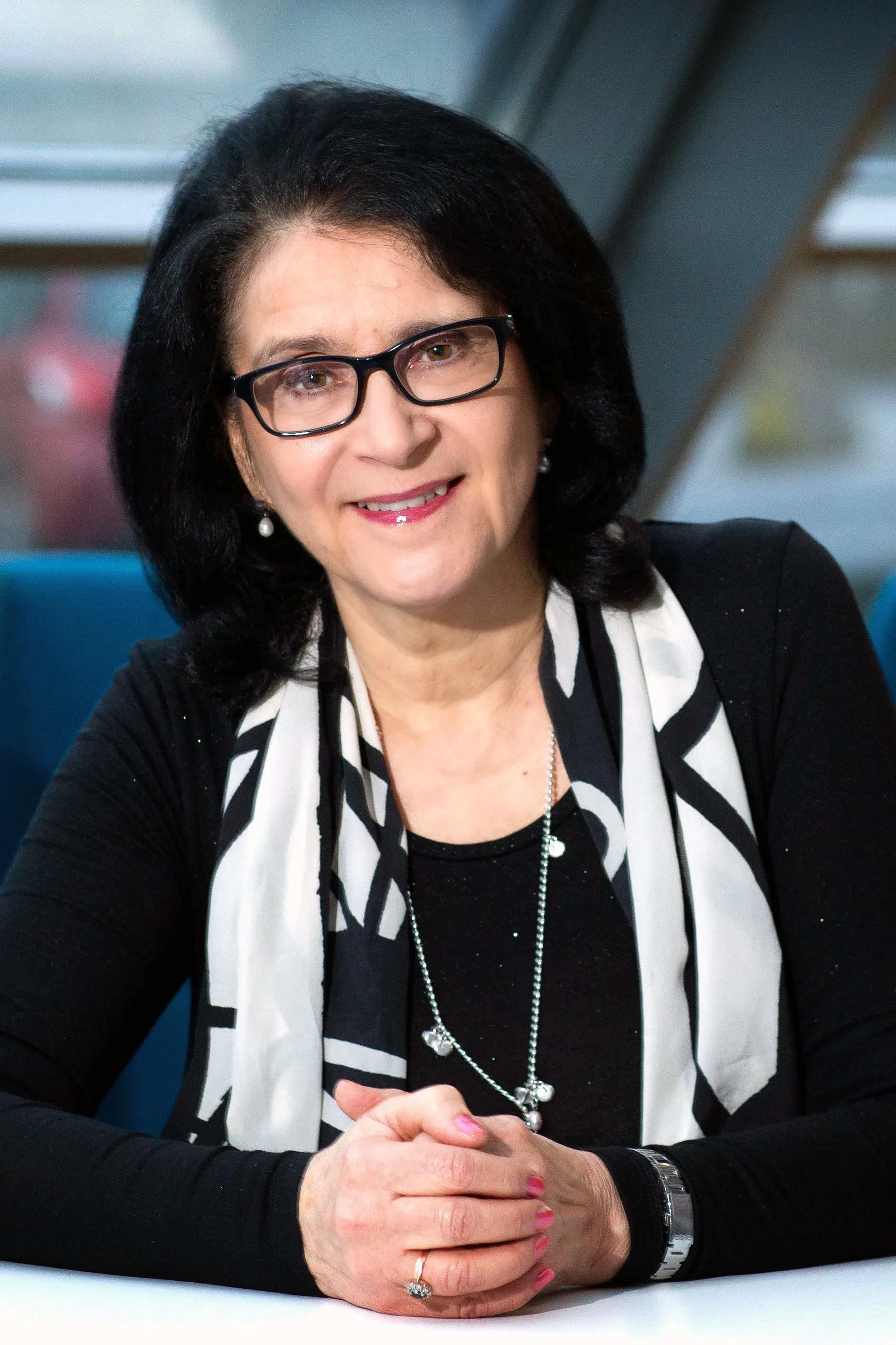
Photograph: Photo: Josefiina Alanen, CC BY 4.0 (via commons.wikimedia.org)
Photo: Josefiina Alanen, CC BY 4.0 (via commons.wikimedia.org)
In 2025, almost two in three young Europeans used a generative AI tool. Eurostat’s survey of households found that 63.8 per cent of 16-to-24-year-olds in the European Union had used one, and that 39.3 per cent had used one for formal education: homework, coursework, study for school or university. Among all adults aged 16 to 74, the share using it for education was 9.4 per cent (Eurostat, 2026).
The gap between those two numbers, 39 per cent of the young against 9 per cent of everyone, is roughly the gap between students and the adults who teach them, set their curricula and write their exam rules.
That is the setting for a study the European Commission’s Joint Research Centre published on 10 December 2025, Generative Artificial Intelligence in Secondary Education: Uses and perceptions from the perspective of early adopters across five EU Member States. Its seven authors include the Finnish education researcher Hannele Niemi. As its title says, it looks at early adopters: the people in schools who were already using the tools. Among the needs it points to are AI literacy and ethical guidelines (JRC, 2025).
The questions asked before the chatbots
None of this would have surprised the researchers who were studying AI in education before November 2022, when ChatGPT made the subject impossible to ignore.
One of them was Niemi, a professor emerita and Research Director at the University of Helsinki, who led a Finnish research consortium called AI in Learning from 2019. In a 2021 commentary for the Journal of Pacific Rim Psychology, she set out the problem that schools now meet in practical terms. Learning research had spent a century establishing that people learn actively and socially. Now a second kind of learner had joined the process.
“We now have two learners: a human and a machine,” she wrote. “How do these two entities work together? In many AI intelligent applications, both learners are also teaching each other.”
The honest answer, in her view, was that nobody knew. “So far, we have very little understanding of what happens in a human–machine interaction.” The useful questions were the ones teachers would face: whether learners keep their agency when a machine does part of the work, whether they can still judge what they have learned, and whether working with a machine leads to “meaningful knowledge construction” or only to finished tasks.
Her commentary also framed AI in schools as a question of data and responsibility. “Who owns the data in multimodal environments? Who can use the information and for what purposes? Who is responsible for decisions with AI tools and services?” she asked. Her answer to the last was clear: responsibility “falls to human beings--those who are designing and developing new applications and algorithms for machines and those who are using the applications.”
The social part of learning
The pandemic had given researchers an unplanned experiment. When teaching moved online in 2020, Niemi wrote, teachers coped, the technology mostly worked, and the information was all available. The biggest complaint from students and teachers in the Finnish school she studied was something else: the lack of genuine social interaction. “Central to learning is the interaction that enables a shared experience,” she concluded.
That finding sits uneasily beside a familiar picture: a student alone with a chatbot, asking it to explain a topic more simply. The tool may be patient and accurate. What it does not supply is the classroom, the argument with a classmate, the teacher who notices that a student has stopped understanding. A school system that treats generative AI as a private tutor for every student may gain efficiency and lose something that the research says matters.
Teachers in the middle
Until the rules are written, the hardest decisions fall to individual teachers: when to allow the tools, how to set work a chatbot cannot simply complete, how to explain to a fifteen-year-old why the slow way of learning to write is worth it.
Niemi’s view, in 2021, was that the companies building these systems needed to understand teaching better. “We also have experience suggesting that technology companies that develop systems for learning need a more theoretical basis for learning and pedagogy,” she wrote. The JRC report looks to schools and governments as well: AI literacy, ethical guidelines. Both are needed, and neither is moving as fast as the students.
What to watch
Two things will show whether schools are adapting or merely coping.
The first is equity. The UN’s 2026 report found that fewer than half of the world’s primary schools have computers or internet access (UN, 2026). A tool that needs a device and a connection will widen any gap that already exists between schools.
The second is teachers themselves. UNESCO estimates that the world needs 44 million more teachers by 2030 (UNESCO, 2024). Tools that take away administrative work could help. Tools that add a new layer of policing student work could make the job harder still.
In 2021, before most teachers had heard of a large language model, Niemi described the field as standing “at a crossroads to destinations that will be led by AI in learning”. The early adopters in the JRC study have already chosen a direction. The question for everyone else is whether to follow.
Sources
- Eurostat, 10 Feb 2026: ec.europa.eu/eurostat/web/products-eurostat-news/w/edn-… (opens in a new tab) - JRC, Villar Onrubia, D., Cachia, R., Rietz, C., Feltrero, R., Niemi, H., Hallissy, M., Reuter, R. (10 Dec 2025), EUR 40555, doi:10.2760/8636621: publications.jrc.ec.europa.eu/repository/handle/JRC1443… (opens in a new tab) - Niemi, H. (2021), “AI in learning: Preparing grounds for future learning”, Journal of Pacific Rim Psychology 15: doi.org/10.1177/18344909211038105 (opens in a new tab) - UN, Sustainable Development Goals Report 2026, Goal 4: unstats.un.org/sdgs/report/2026/Goal-04 (opens in a new tab) - UNESCO, Global report on teachers (2024): digitallibrary.un.org/record/4039006 (opens in a new tab)