Cover story
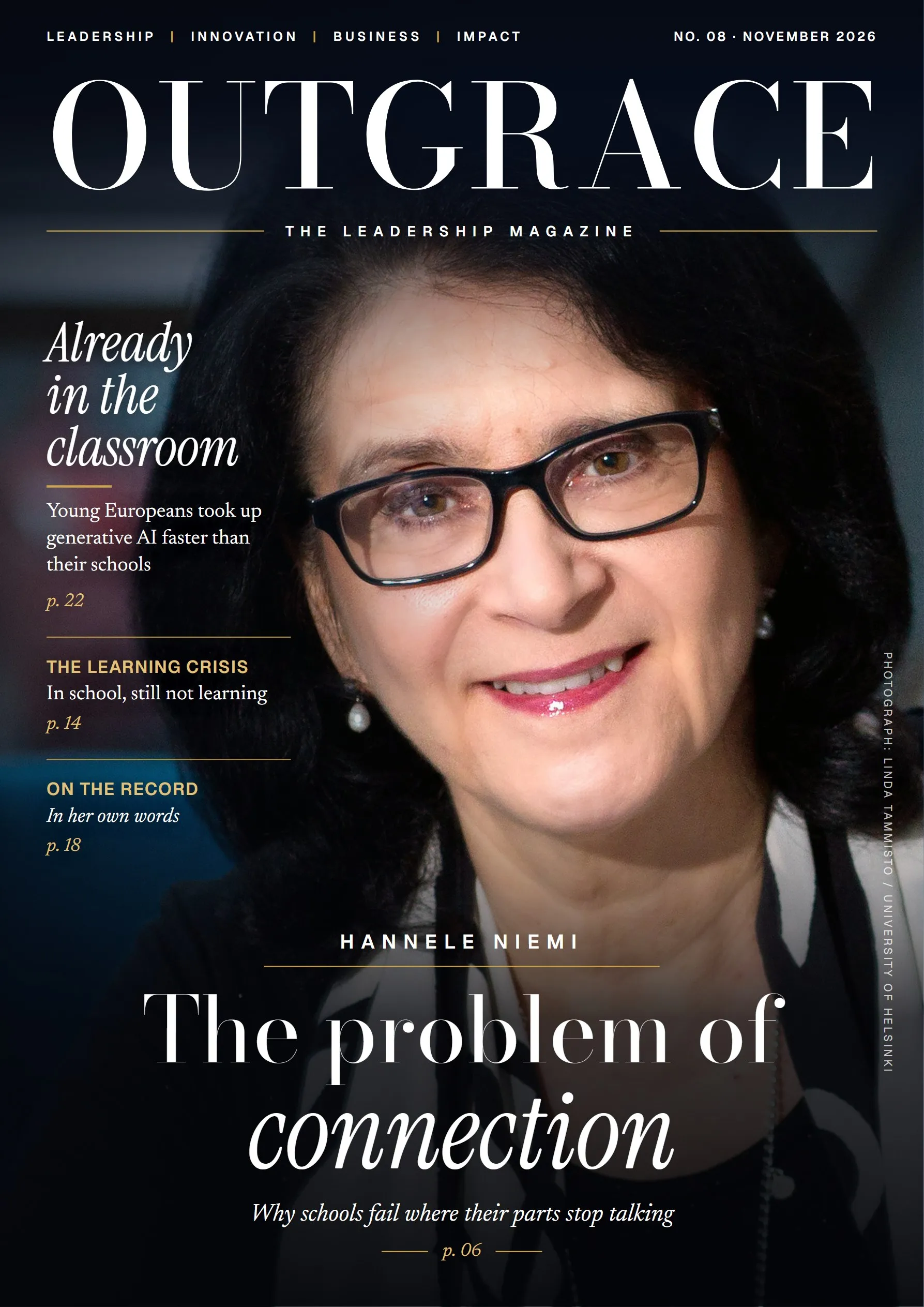
Hannele Niemi and the Problem of Connection
By Outgrace Editors · 13 min read
Chapter one: Pretoria
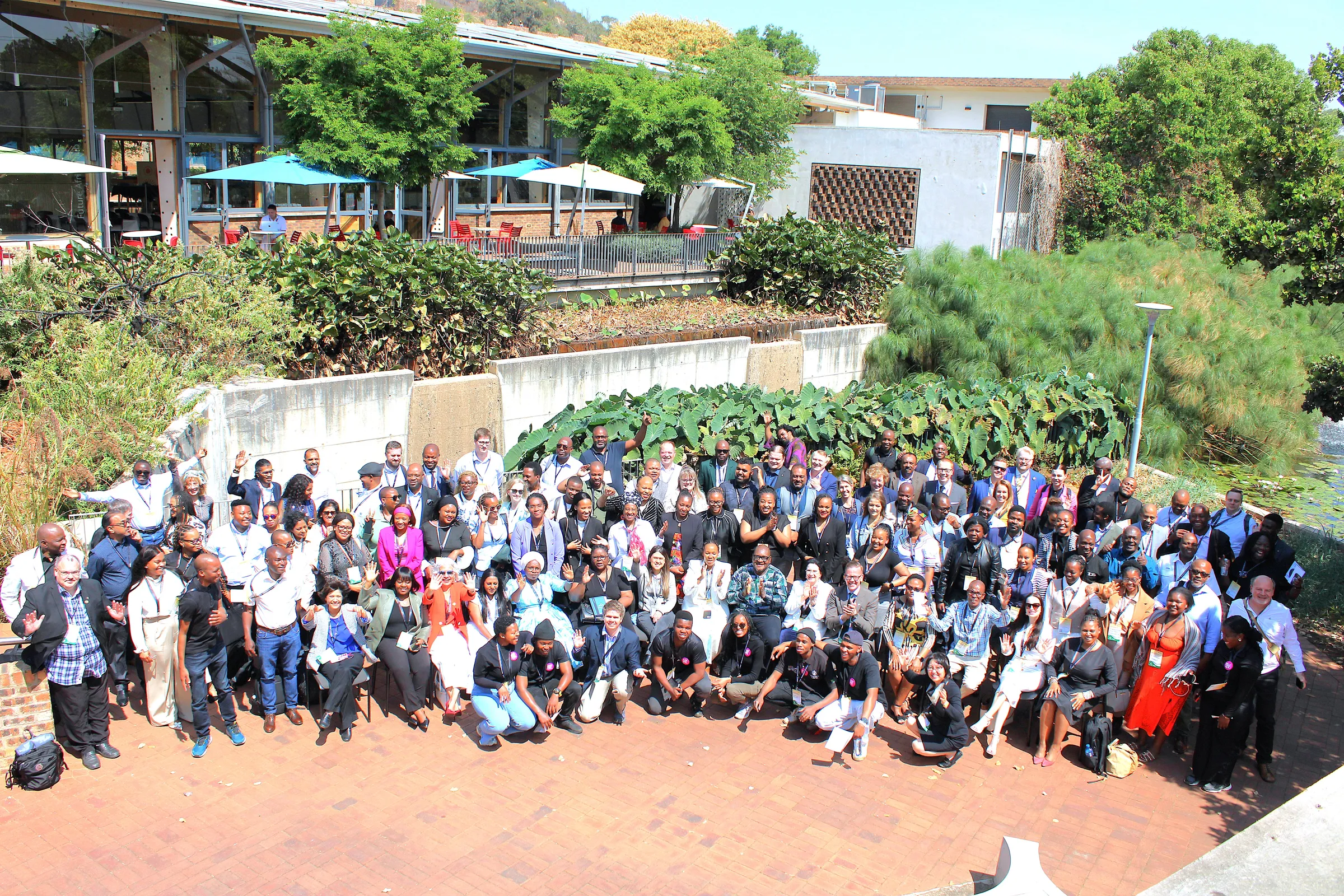
On 23 October 2024 the higher-education ministers of South Africa and Finland addressed a hall on the Future Africa campus of the University of Pretoria. They were opening a summit with a long title, “Building Industry-Education Partnerships for Transformational Growth in Africa”, and a narrow subject: how to train people to repair mining rigs, run water plants and work on building sites in a country where the jobs and the skills do not meet.
South Africa’s Deputy Minister of Communications and Digital Technologies, Mondli Gungubele, thanked the organisers, “especially the Digital Academies in Africa (DAIA) initiative”, and gave “a special thank you to our international partners, particularly from Finland”. In a parallel session that afternoon, the research side of the project presented its work. The first talk, on “Future of Learning: Insights into Frontier Technology”, was given by Dr Jenny Niu and Professor Hannele Niemi of the University of Helsinki.
Niemi led the project. Her title on its website is “Professor, Scientific Leader”. By the University of Helsinki’s own records she had been a professor emerita for seven years by then. She was also, and still is, the university’s UNESCO Chair on Educational Ecosystems for Equity and Quality of Learning, a post that commits her to promoting UNESCO’s aims through networking, research and international debate.
The reason she gave for going to South Africa was plain. “Youth unemployment is a major problem in South Africa,” she told the University of Helsinki’s news service in May 2026. “A central reason for this is that education does not meet the needs of professional life.” The figures support her. In the second quarter of 2026, Statistics South Africa put the country’s official unemployment rate at 33.6 per cent, and the rate for people aged 15 to 34 at 47.4 per cent.
The project, Digital Academies in Africa, ran from 2022 to 2025, with money from Finland’s Ministry for Foreign Affairs and from Business Finland. It put Finnish and South African researchers alongside five Finnish companies, among them Sandvik, which makes underground drilling machinery and trains the local staff who maintain it. It signed agreements with Tshwane University of Technology in May 2024 and with the South African water utility Rand Water in September. Six South African researchers spent a longer period in Finland. A Sandvik adviser later told the university that the training work had paid off: “our South African customers now trust our staff in a completely new way.”
Niemi drew a lesson about method from it, and it was not about technology.
You don’t engage in collaboration through emails in Africa: instead, you first have to create a foundation of personal contact to build cooperation.
The sentence is small, but it carries the idea at the centre of her recent work. Niemi calls it the educational ecosystem. Schools, universities, curriculum boards, evaluation agencies, employers and families, she argues, form one living system; reforms fail when those parts stop sharing information and stop trusting each other. Pretoria was a test of that idea a long way from the Nordic welfare state in which she developed it.
This portrait is drawn from the public record: her own articles and books, the University of Helsinki’s pages and news, project reports and the international data her work responds to.
- Peer-reviewed articles and book chapters, by her count
- 400+
- Doctoral theses she has supervised, with more than 400 master’s theses
- 40+
- Children and young people out of school worldwide in 2024 (UN, 2026)
- 273m
- 10-year-olds in poorer countries unable to read a simple text (World Bank, 2022)
- 70%
Chapter two: The Comprehensive-School Country
Niemi’s published biography begins in an unusual place for an education professor. She took three degrees at the University of Helsinki: a Master of Philosophy in 1974, a Master of Theology in 1977 and a doctorate in 1978. Moral education has remained one of her listed research interests ever since, alongside teachers’ professional development, the quality of teacher education and, from the 1990s, technology for learning.
From 1987 to 1998 she held professorships of education in the teacher-education departments of three Finnish universities, at Oulu, Turku and Tampere, with a six-month visiting professorship at Michigan State University in 1989. In 1998 she moved to Helsinki as professor of education and head of department. She became dean of the Faculty of Education in 2001 and, from 2003 to 2009, the university’s Vice-Rector for Academic Affairs. Between 2002 and 2006 she also directed “Life as Learning”, a national research programme of the Academy of Finland, and sat on the steering committee of the United Kingdom’s Teaching and Learning Research Programme.
The country she worked in became, after 2000, one of the most studied school systems in the world. In her own words, it “has become well-known since 2000 due to its high performances in the international PISA assessments”, and foreign governments wanted to know how. Niemi was one of the Finnish scholars who wrote the answer down for international readers. In 2012 she edited, with Auli Toom and Arto Kallioniemi, Miracle of Education: The Principles and Practices of Teaching and Learning in Finnish Schools, a collection by more than 30 expert authors that went into a revised second edition in 2016. In 2013 the Finnish Teachers’ Union named her the most influential person in education that year.
Her account of the Finnish story is less about miracles than about plumbing. In a 2021 article for the Slovenian CEPS Journal, she went back to the 1950s, when Finland ran a parallel system in which children chose, at about ten, between an academic school that led to university and a route that did not. Among Finns over 20, 29 per cent then had no education; in the rural north the figure was almost 48 per cent. The comprehensive school was put into law in 1968, after several years of committees, pilots and argument. Primary-school teachers were moved into universities and, from 1979, required to hold a master’s degree. Streaming by ability, first kept as a concession to secondary teachers and business, was dropped in the 1980s in favour of extra support for weaker pupils. In the 1990s, the national education agency decided that Finland would not use standardised achievement tests to rank schools or teachers.
What made the reform work, she argues, was that every part of the system moved together: teacher education, curriculum, evaluation, local government, unions. “Without the cooperation of educational leaders, teachers, principals, political parties, workforce and economy representatives and the labour market … the major reform probably would not have been possible,” she wrote.
The most important condition for real cooperation and information sharing is that the different partners and stakeholders can trust each other.
She has spent much of her career in the machinery that keeps that trust. She chaired the Finnish Education Evaluation Council from 2012 to 2014, served on the Finnish Higher Education Evaluation Council, helped found the Teacher Education Policy in Europe network in 2005 and chaired it in 2014–15, and sat on panels that evaluated more than ten European universities. From 2018 to 2023 she chaired the university board of the University of Lapland. From 2013 to 2023 she chaired the Sino-Finnish Joint Learning Innovation Institute, a group of Finnish universities working with Beijing Normal University.
The article does not end in celebration. Since the first PISA round, she noted, the gaps between Finnish students from different social backgrounds had grown, and so had the gap between boys and girls. “Although Finland has many good experiences with interconnectedness, open information and knowledge sharing among different partners in transformations,” she wrote, “supporting the educational ecosystem is a never-ending process.” There was, she added, “much work to be done, despite Finland’s position as one of the top-performing educational countries in the world.”
The data since have been harder still. In PISA 2022, Finnish 15-year-olds scored 484 in mathematics, above the OECD average of 472 but 64 points below their 2006 result of 548. Reading fell 30 points from the previous round, and the gap between the most and least advantaged quarters of students widened by 16 points. Niemi’s published work, as reviewed for this piece, does not contain her own reading of those results. It is the first question we would put to her.
Career timeline
- 1974–1978
Master of Philosophy, Master of Theology and PhD, University of Helsinki
- 1987–1998
Professor of education in teacher-education departments at Oulu, Turku and Tampere
- 1998
Professor of education, University of Helsinki
- 2001–2003
Dean, Faculty of Education
- 2003–2009
Vice-Rector for Academic Affairs, University of Helsinki
- 2012
Co-edits Miracle of Education; chairs the Finnish Education Evaluation Council (to 2014)
- 2017
Research Director, as professor emerita
- 2018
UNESCO Chair on Educational Ecosystems for Equity and Quality of Learning
- 2019–2022
Leads the AI in Learning consortium (dates vary by source)
- 2022–2025
Leads Digital Academies in Africa
- 2026
Lead editor of an open-access Springer book on learning ecosystems in Africa
Chapter three: Two Learners
In 2017 Niemi became a professor emerita and the university’s Research Director. Two years later she started one of the largest projects of her career.
AI in Learning was a Finnish co-innovation consortium paid for by Business Finland, which she led as scientific leader. Its project blog describes sub-projects with schools and with education-technology companies, and cooperation with Stanford University, where Niemi had spent seven months as a visiting scholar across three stays, and with Beijing Normal University. Its ethics sub-project set itself a practical aim: to find out what challenges companies and schools met when they used artificial intelligence, and what support they needed.
The consortium’s main publications came out before and after the release of ChatGPT in November 2022. The first was a special issue of the Journal of Pacific Rim Psychology in August 2021, for which Niemi wrote the closing commentary, “AI in learning: Preparing grounds for future learning”. The second was AI in Learning: Designing the Future, an open-access book published by Springer in 2023 and edited by Niemi with Roy Pea of Stanford and Yu Lu of Beijing Normal University. In it, more than 60 researchers from China, the United States and Finland reported their work.
Her 2021 commentary is the clearest statement of how she thinks about the subject, and it is not an advertisement. It starts from what learning research has established over a century: that people learn actively, socially and with their whole selves. “Learning is a holistic process in which the body, mind, and emotions are involved,” she wrote. It then asks what happens when a machine that also learns enters that process.
We now have two learners: a human and a machine. How do these two entities work together? In many AI intelligent applications, both learners are also teaching each other.
Her answer was that nobody yet knew. “So far, we have very little understanding of what happens in a human–machine interaction,” she wrote. The commentary used the evidence from the shift to online teaching during the pandemic, in a Finnish upper secondary school she had studied with Päivi Kousa: the technology worked and teachers coped, but students and staff missed real contact. “Central to learning is the interaction that enables a shared experience.”
The ethical questions she raised were specific. “Who owns the data in multimodal environments? Who can use the information and for what purposes? Who is responsible for decisions with AI tools and services?” Responsibility, she wrote, falls to human beings, both “those who are designing and developing new applications and algorithms for machines and those who are using the applications”. And she had a direct message for the industry her project worked with: “technology companies that develop systems for learning need a more theoretical basis for learning and pedagogy.”
That message has been tested since. In December 2025 the European Commission’s Joint Research Centre published a study of generative AI in secondary education, seen from the perspective of early adopters across five EU member states. Niemi is one of its seven authors. Among the needs it points to are AI literacy and ethical guidelines. Eurostat’s figures show how quickly the practice spread: in 2025, 39.3 per cent of 16-to-24-year-olds in the EU used generative AI for formal education.
The AI work and the Finnish reform work rest on the same idea. A tool introduced into a system without the teachers, families and institutions around it will not do what its makers expect. In her 2021 phrase, the field was “at a crossroads to destinations that will be led by AI in learning”. It was a statement of uncertainty, not of confidence.
Chapter four: The Problem of Connection
The line that Niemi’s UNESCO Chair website prints under her name is not about Finland or about technology.
“Globally speaking, it is a great achievement that most children are going to school,” it reads. “A bigger problem is that in much of the world, the children are learning next to nothing in their schools. Even after four years of school, many pupils can’t read or add.”
The international data bear her out, and in some respects they have worsened. The United Nations’ 2026 report on the Sustainable Development Goals counts 273 million children and young people out of school in 2024; the out-of-school rate fell only from 17.4 per cent in 2015 to 16.8 per cent. In 57 countries with comparable data, the share of students reaching a minimum standard in reading fell from 59 per cent in 2012 to 47 per cent in 2022. The World Bank estimated in 2022 that 70 per cent of ten-year-olds in low- and middle-income countries could not read and understand a simple text. And the teachers who would close the gap are in short supply: UNESCO estimates that 44 million more primary and secondary teachers are needed by 2030, while the annual rate at which primary teachers leave the profession roughly doubled between 2015 and 2022.
Niemi’s 2021 article begins from exactly this problem and asks why reforms aimed at it so often fail. Her answer has three parts, borrowed from biology: a healthy ecosystem has interconnected parts, information flowing between them, and diversity. Education systems, she argues, tend to break into “segmented territories with their own aims, social practices, and power structures”. Teacher education drifts away from schools; curricula are written without the teachers who must deliver them; evaluation becomes control. And access alone settles nothing: “Indeed, equal opportunities are not sufficient if learning support systems and educational quality are lacking.”
The remedy she proposes is administrative and, in its way, hard to sell. “Diversity in ecosystems demands new administrative cultures that shift from focusing on control to focusing on collaboration and trust between actors,” she wrote. Reform has legitimacy, she argues, only when policymakers, teachers, students and parents are brought in at the preparation stage and kept informed throughout.
There are fair objections. Trust is easy to recommend and hard to build; the Finnish conditions she describes (a small country with strong unions, autonomous universities and a political consensus on equality that dates from the 1960s) do not transfer easily. Her own country’s falling results show that even a well-connected system can lose ground. And her most recent work, on artificial intelligence, concerns a technology whose makers sit largely outside any national education system. Her published work answers in the same way throughout: the connections have to be built and rebuilt, and the work is never finished.
South Africa is where she has tested it most recently. Digital Academies in Africa did not try to export the Finnish school. It tried to connect three groups that rarely work together there: universities and vocational colleges, companies that cannot find skilled staff, and government. The University of Helsinki reports that the project ran two national conferences in Pretoria and produced “dozens of articles”. Its results are collected in an open-access Springer book published in 2026, Towards Industrial Revolution and Sustainable Growth in Africa: Learning Ecosystems of the Future, which Niemi edited with Daryl McLean, Marianna Vivitsou and Jari Lavonen. One of the chapters she wrote with Heidi Bolton is titled “Towards Lifelong Learning Ecosystems in the African Contexts”.
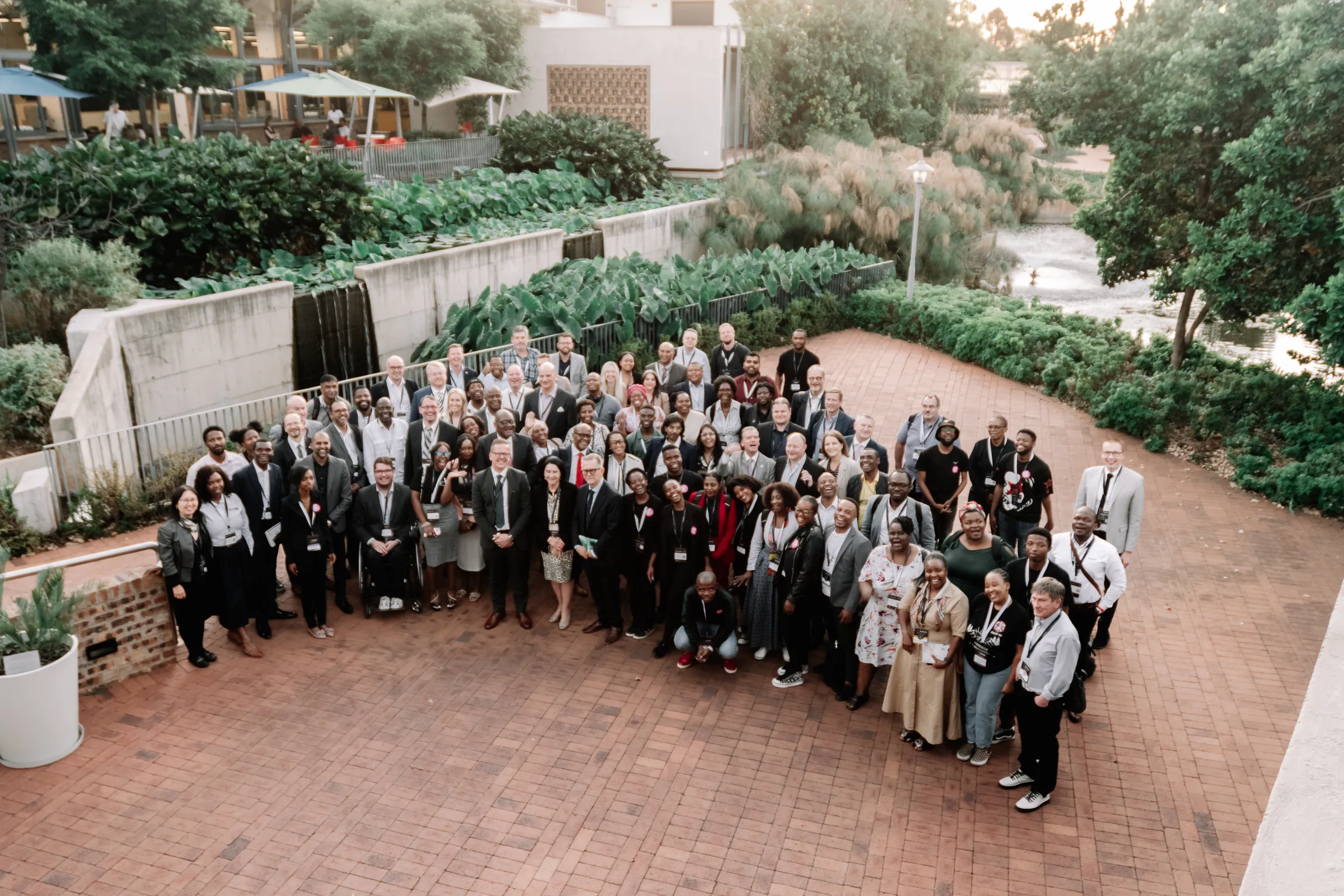
“The project was a huge learning experience for all participants and an excellent opportunity to explore new cultural and operating environments,” she said in May 2026. “We learned how researchers can contribute to the development of new skills through education.”
She is not slowing down. Her 2026 CV lists a new appointment as a Distinguished Visiting Professor at the University of Johannesburg, from 2026 to 2031, and new papers on teachers’ digital skills in South Africa and on teacher education. In the University of Helsinki’s records she is still listed as Research Director and as its UNESCO Chair, a term that runs to 2026.
The questions for her are concrete. Can a project built on personal trust outlast the people who built it, once the Finnish funding ends? What does a scholar who explained the Finnish system to the world make of its decline at home? And as generative AI spreads through classrooms, who will do the slow work she has always prescribed: getting the teachers, the companies and the governments into the same room before the reform begins, rather than after it fails?
Her slides for a teaching conference in Ireland in December 2024 include a short sentence about how students learn: “Learning is an active process of a unique person.” It describes the institutions she has spent her life connecting as well as it describes a child. Nobody can do the learning for them, and it cannot be hurried.